1/0

The Alignment, Konst Kvarnstugan (Invited Municipal Competition)

Scroll Down for German

For Kvarnstugan, artist Zuzanna Czebatul is proposing the artwork The Alignment within the newly
built public space around Ursvik square in Northern Stockholm, referring to the theme of encounter,
representing unity as well as the visionary manifolds of the complex itself. The monumental artwork at the entrance of the building is an ever-present investigation of the conditions and possibilities of art as a form of connection, coming into direct dialogue with architecture and public, history and
present, drawing attention to the complex whilst remaining inserted into it.

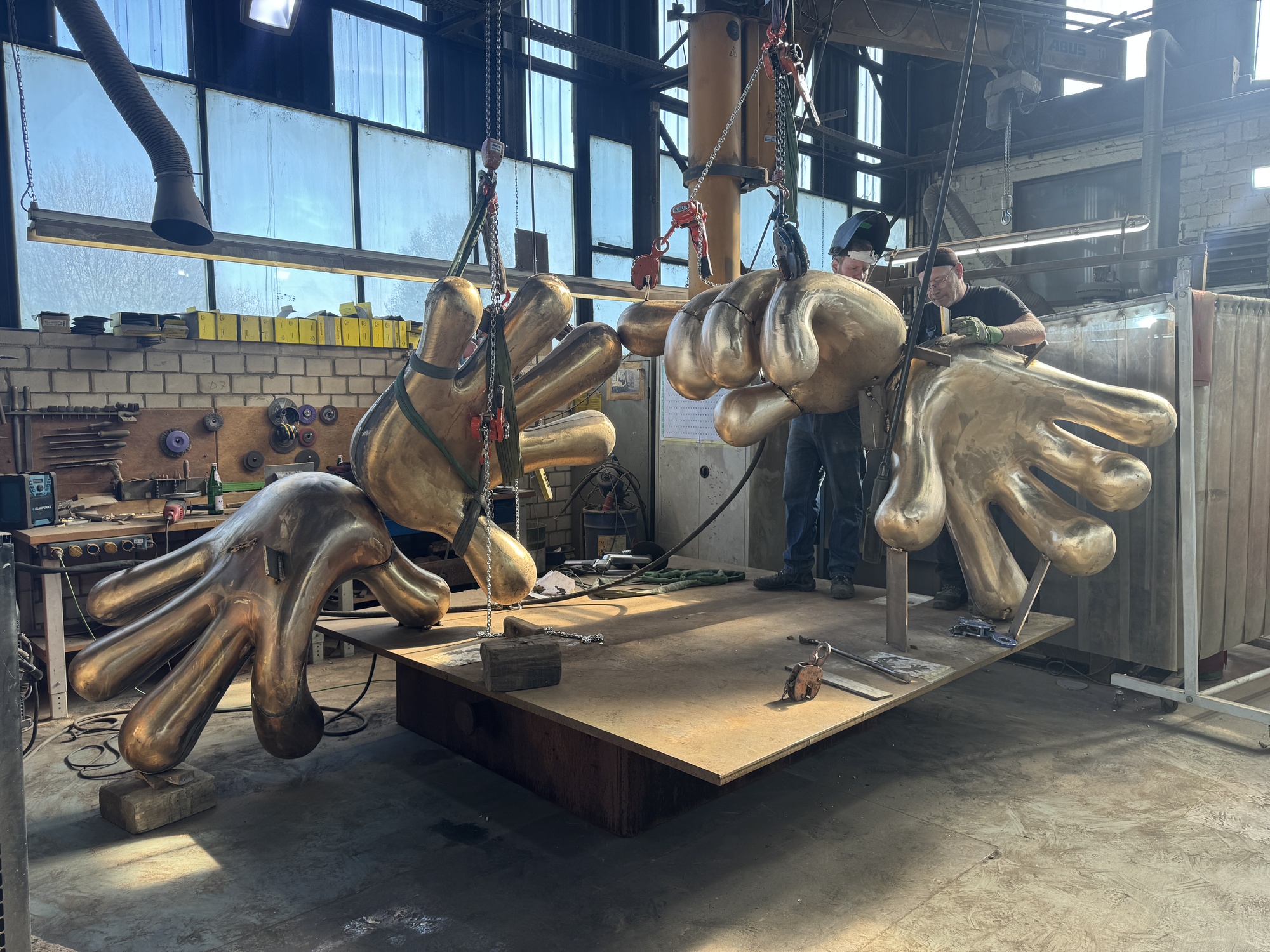
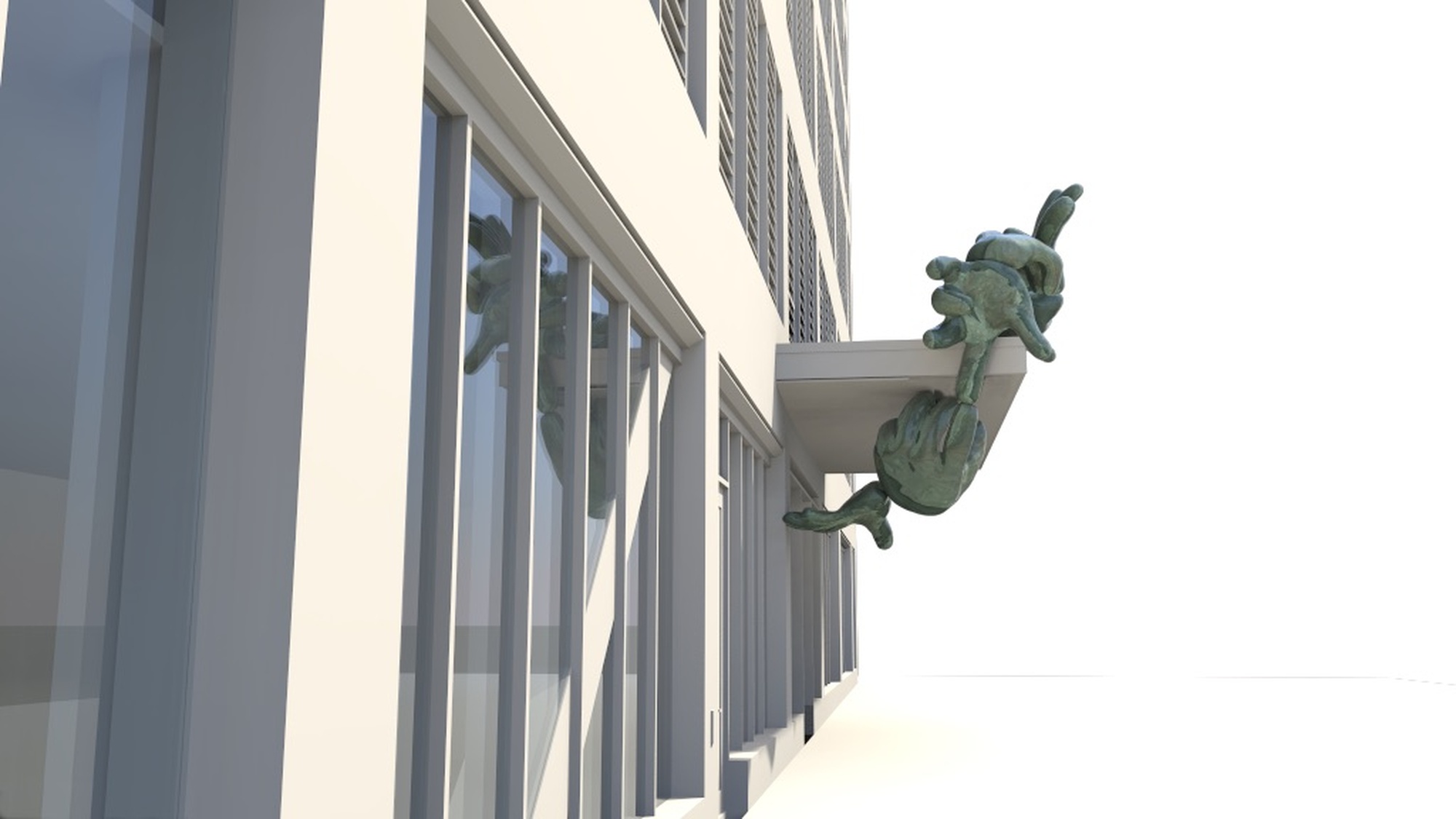
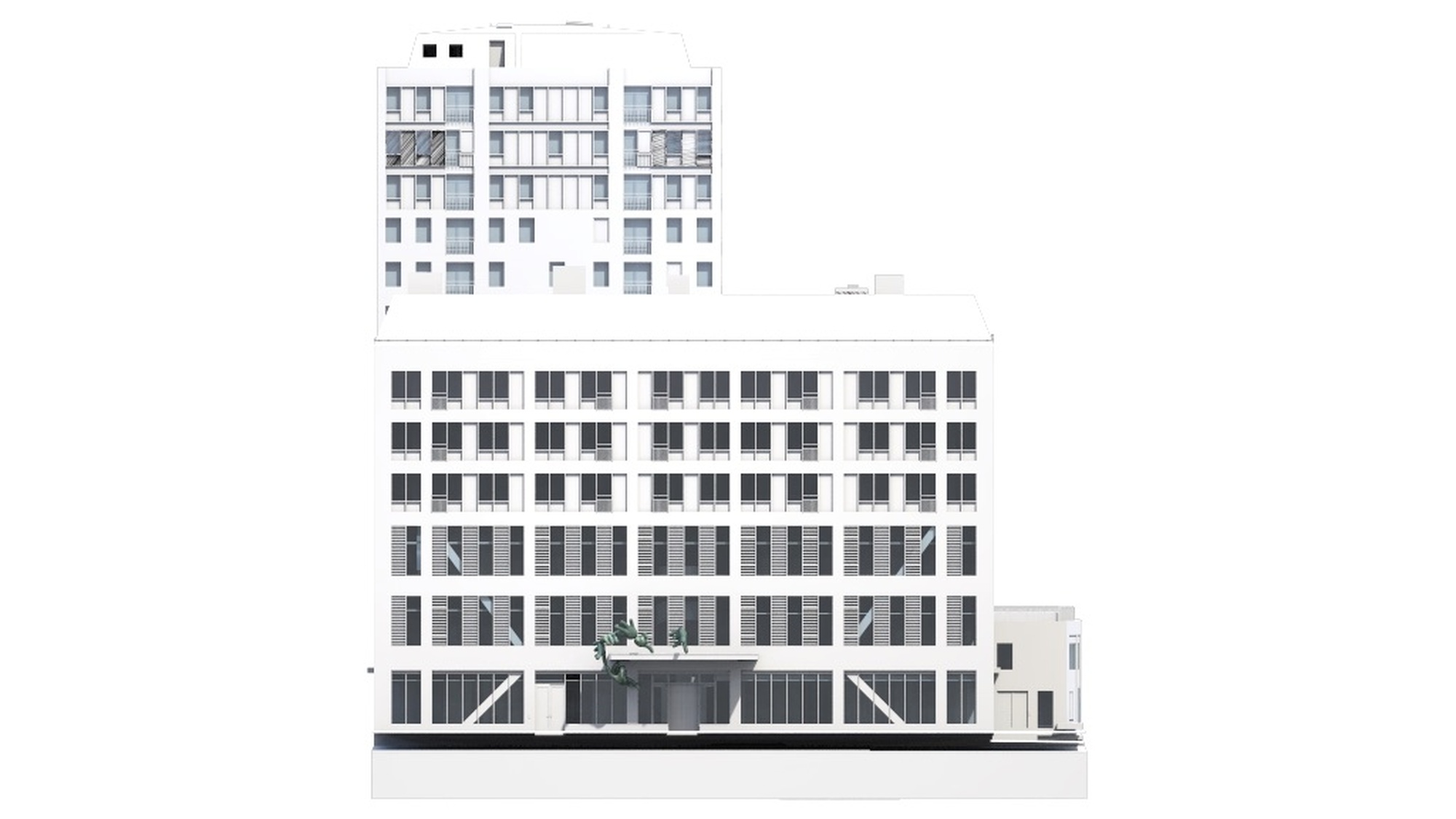
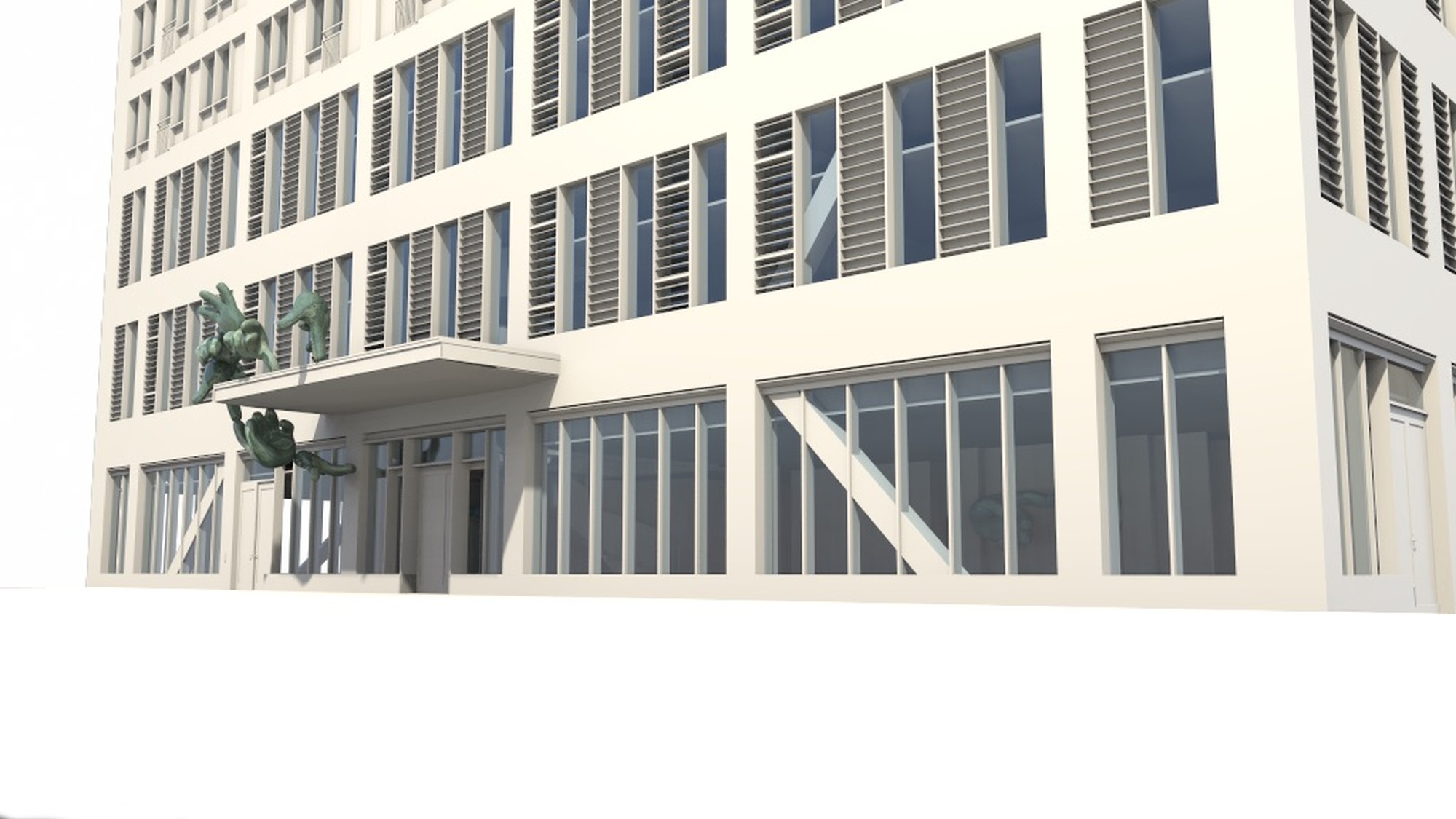
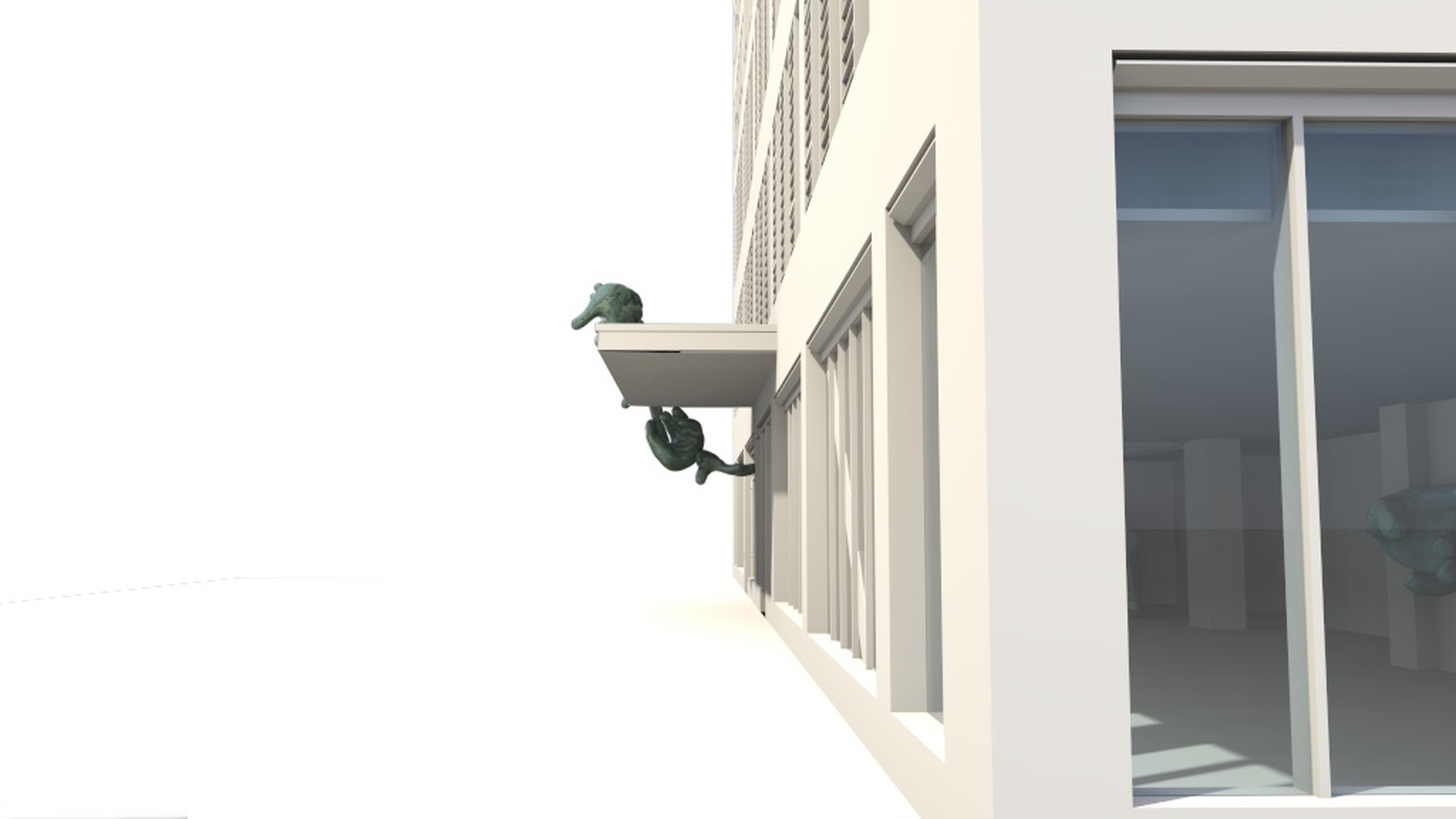
The Alignment is an installation of a bronze hands travelling along one side of the entrance doors of Torghuset. The work consists of hand gestures which are always related to each other, creating a
floral and symbolic chain. Inside the building, the gestures will be represented in the form of two
oversized bronze hands touching. All parts of the sculpture being bronze, they are varying in their
patina, choosing a classic verdigris for the outside, whilst gradiating into blue inside the building.
Referring to the Blue Gate entrance of Royal Djurgården in Östermalm in a deconstructed way,
Czebatul is using the floral and historic idea of the baroque Fibonacci for her artwork. The rounded
fingers and palms of the hands formally imitate their role model: The hands are looking soft and are
rhythmically touching each other just barely, almost looking like organic shapes that arise from each
other.

Like the repeatedly placed circular formations of the Blue Gate, The Alignment refers to
equality, mathematically-modeled. The congenial hands and their slightly floating gestures look
inviting and strengthening, suggesting potential for cohesion and education, directly inviting people,
and representing the diversity to be found inside the building complex itself. The Alignment is
supposed to contrast the straight architecture: Looking dynamic and encouraging, it helps with an
engaging entrance. The artwork loops around the entrance on one side and unfolds a suction effect
that continues inside in with a monumental sculpture that reimagines smaller hand chains. The very
distinct patina should also reflect modern and historical manifestations of the bronze sculpture, which also allude to the color and symbolism of the Blue Gate, its historicity and democratic vision.

Having worked with the topic of gates and entrance halls for varied projects before, Zuzanna
Czebatuls work for Kvarnstugan hence directly and uniquely represents the city centre around Ursvik
square. Because of its contrast to the building’s architecture, it can be easily recognized, whilst the
hands can be understood as a positive and inviting effect on all citizens, young and old, and therefor
strengthen their imagination and curiosity, energy and dynamics in relation to the building, the city, its history as well as its future goals.

The Alignment unravels a specific artistic potential, being sitespecifically material and form-related, whilst representing Sweden as a whole, inviting everyone to engaging as well as relating to themselves and others. Having a strong positive and welcoming connotation, the work peacefully invites everyone to join the community.

Für Kvarnstugan schlägt die Künstlerin Zuzanna Czebatul das Kunstwerk The Alignment im neu geschaffenen öffentlichen Raum rund um den Ursvik-Platz im Norden von Stockholm vor. Die Arbeit bezieht sich auf das Thema der Begegnung, steht für Einheit und verweist zugleich auf die visionären Dimensionen des Gebäudekomplexes selbst. Die monumentale Arbeit am Eingang des Gebäudes ist eine fortwährende Untersuchung der Bedingungen und Möglichkeiten von Kunst als Form der Verbindung. Sie tritt in einen direkten Dialog mit Architektur und Öffentlichkeit, mit Geschichte und Gegenwart, lenkt die Aufmerksamkeit auf den Komplex und bleibt zugleich in ihn eingebettet.

The Alignment ist eine Installation aus bronzenen Händen, die entlang einer Seite der Eingangstüren des Torghuset verlaufen. Die Arbeit besteht aus Handgesten, die stets in Beziehung zueinander stehen und eine florale sowie symbolische Kette bilden. Im Inneren des Gebäudes werden die Gesten in Form von zwei überdimensionierten, sich berührenden Bronzehänden dargestellt. Alle Teile der Skulptur bestehen aus Bronze, deren Patina variiert: Außen wird ein klassisches Grünspan gewählt, das im Inneren des Gebäudes in ein Blau übergeht.

In dekonstruktiver Weise verweist Czebatul auf den Eingang der Blue Gate im Königlichen Djurgården in Östermalm und greift zugleich die florale und historische Idee der barocken Fibonacci-Struktur für ihr Kunstwerk auf. Die gerundeten Finger und Handflächen der Hände imitieren formal ihr Vorbild: Die Hände wirken weich und berühren sich in einem rhythmischen Ablauf nur ganz leicht, beinahe so, als entstünden organische Formen aus einander.

Ähnlich wie die wiederholt gesetzten kreisförmigen Formationen der Blue Gate verweist The Alignment auf Gleichheit in mathematisch modellierter Form. Die einander zugewandten Hände und ihre leicht schwebenden Gesten wirken einladend und stärkend. Sie deuten ein Potenzial für Zusammenhalt und Bildung an, laden die Menschen direkt ein und stehen zugleich für die Vielfalt, die im Gebäude selbst zu finden ist.

The Alignment soll einen Kontrast zur geradlinigen Architektur bilden: dynamisch und ermutigend gestaltet, unterstützt die Arbeit einen einladenden Zugang zum Gebäude. Die Skulptur umschließt den Eingang auf einer Seite und entfaltet eine Art Sogwirkung, die sich im Inneren in einer monumentalen Skulptur fortsetzt, welche die kleineren Handketten neu interpretiert. Die markante Patina spiegelt sowohl moderne als auch historische Erscheinungsformen der Bronzeskulptur wider und verweist zugleich auf Farbe und Symbolik der Blue Gate, ihre Geschichtlichkeit und ihre demokratische Vision.

Nachdem Zuzanna Czebatul bereits in verschiedenen Projekten mit dem Thema von Toren und Eingangshallen gearbeitet hat, repräsentiert ihre Arbeit für Kvarnstugan auf direkte und einzigartige Weise das Stadtzentrum rund um den Ursvik-Platz. Durch den Kontrast zur Architektur des Gebäudes ist die Arbeit leicht wiederzuerkennen, während die Hände als positives und einladendes Zeichen für alle Bürgerinnen und Bürger – jung wie alt – verstanden werden können. So stärken sie Vorstellungskraft und Neugier, Energie und Dynamik im Verhältnis zum Gebäude, zur Stadt, zu ihrer Geschichte und zu ihren zukünftigen Zielen.

The Alignment entfaltet ein spezifisches künstlerisches Potenzial: ortsspezifisch in Material und Form, zugleich aber als Repräsentation Schwedens als Ganzes gedacht. Die Arbeit lädt alle Menschen dazu ein, sich einzubringen, sich selbst und andere in Beziehung zu setzen. Mit ihrer starken positiven und einladenden Konnotation lädt sie auf ruhige Weise dazu ein, Teil der Gemeinschaft zu werden.