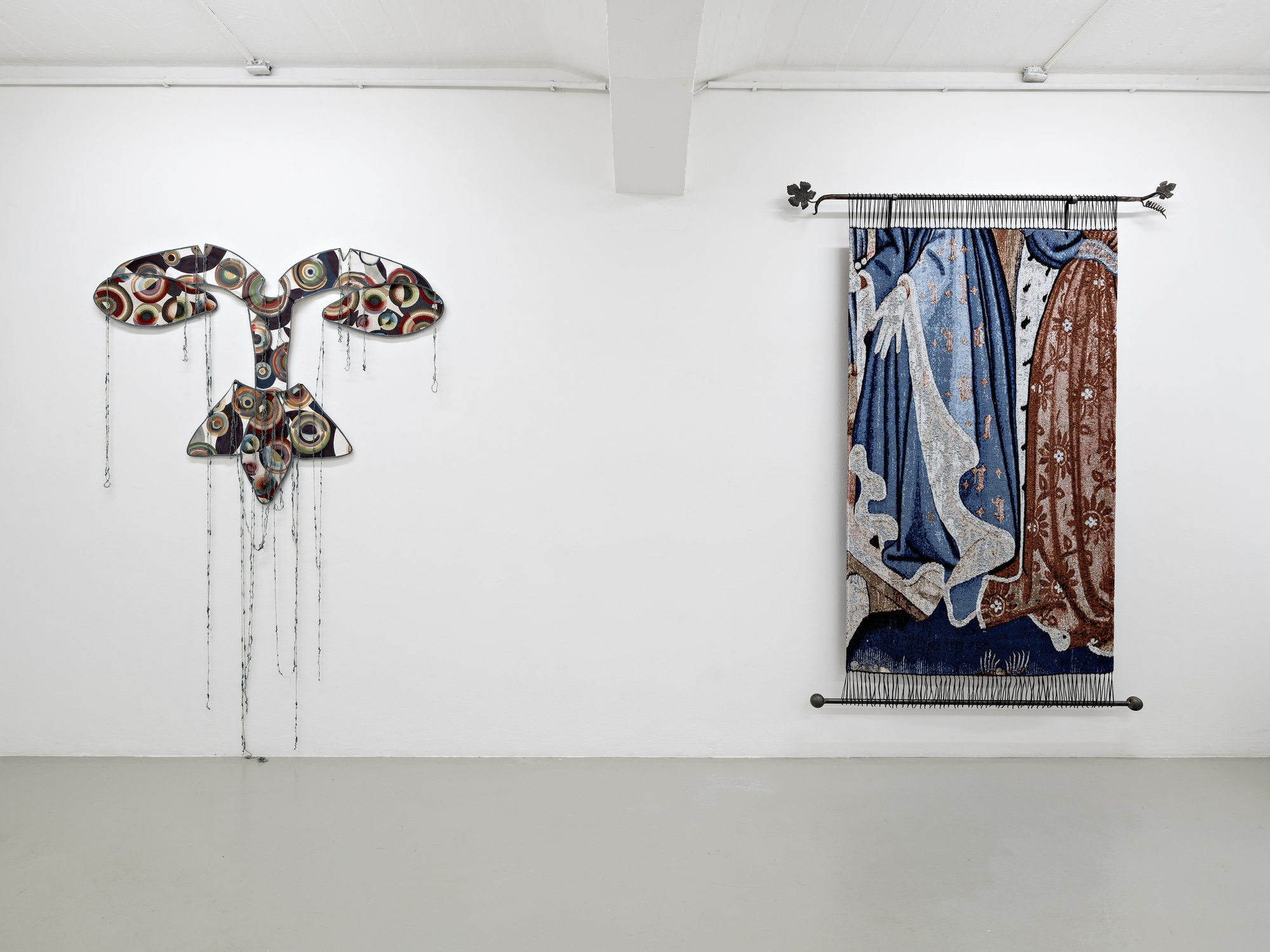
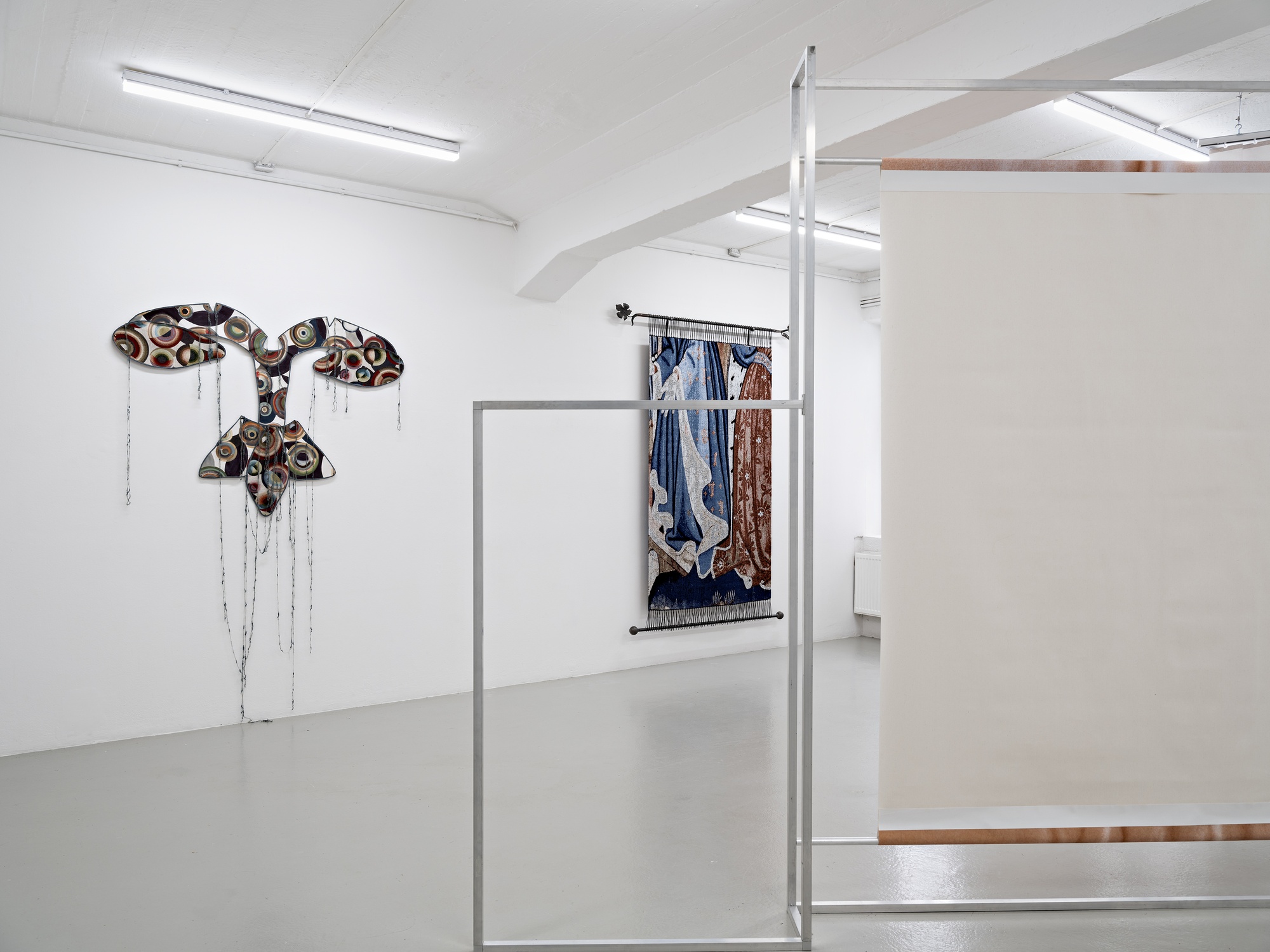
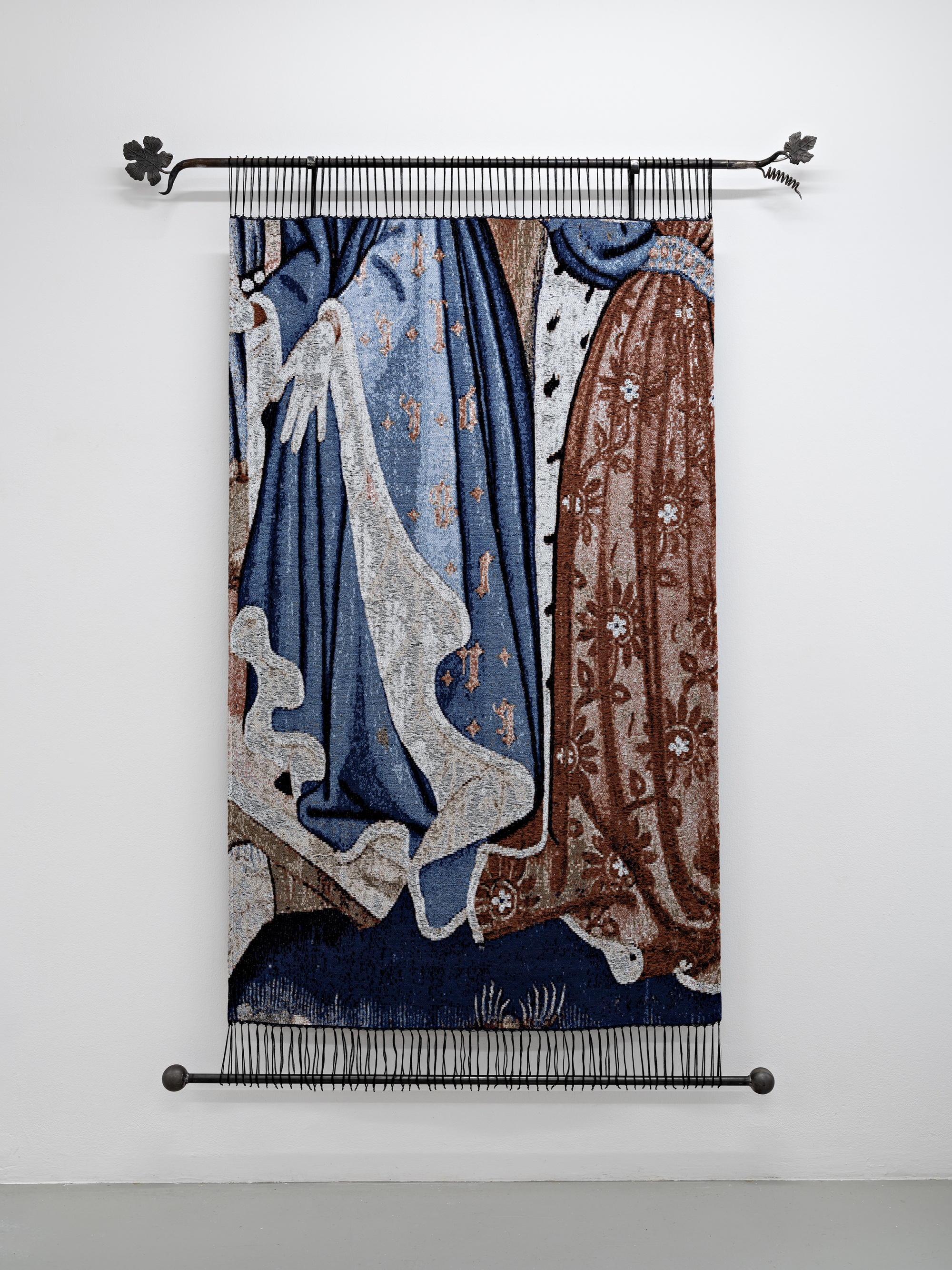
A Trillion Threads Still Weaving (Two Veils)
Installation View, 2024
A Trillion Threads Still Weaving (Two Veils)
Installation View, 2024
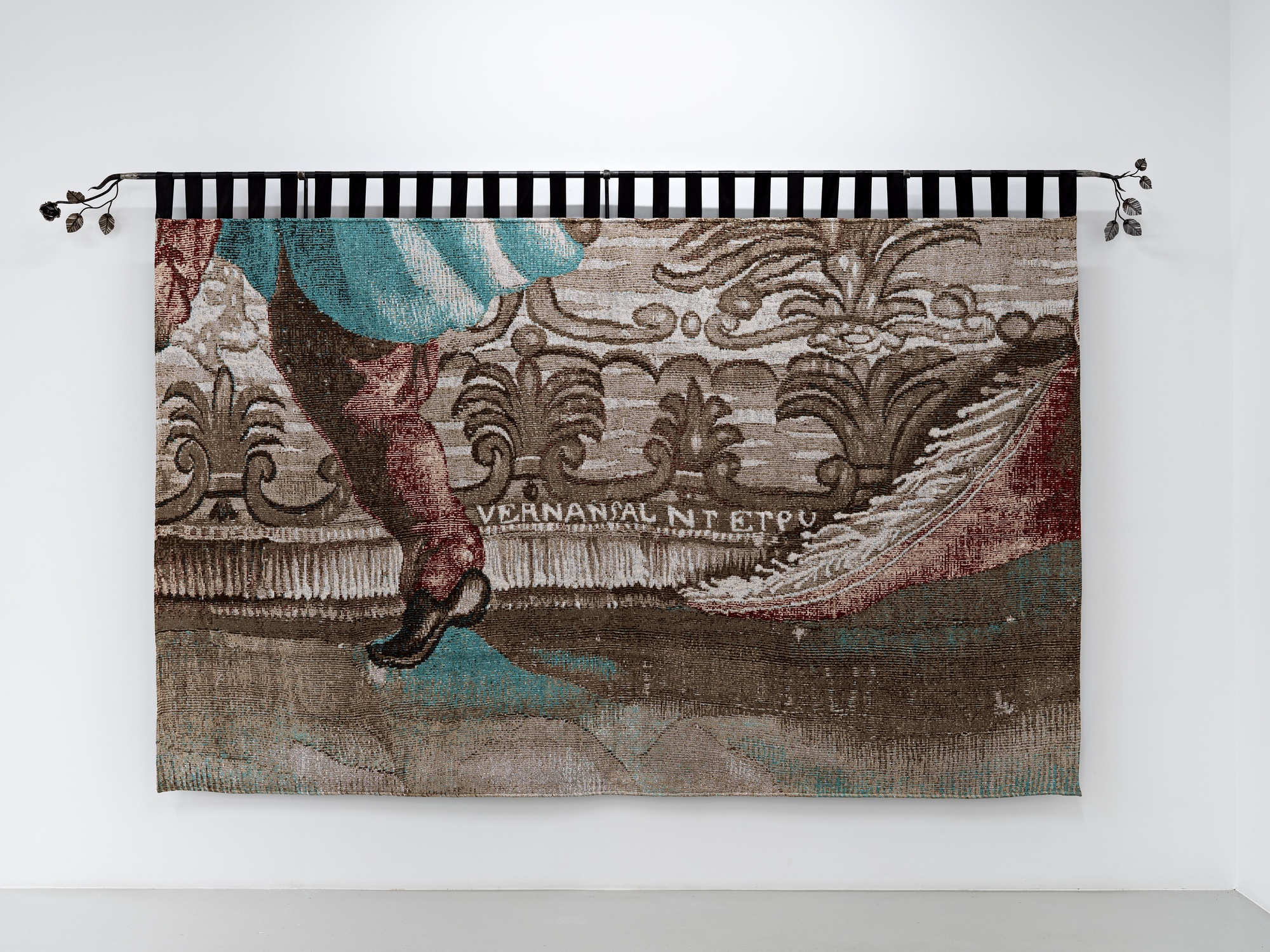
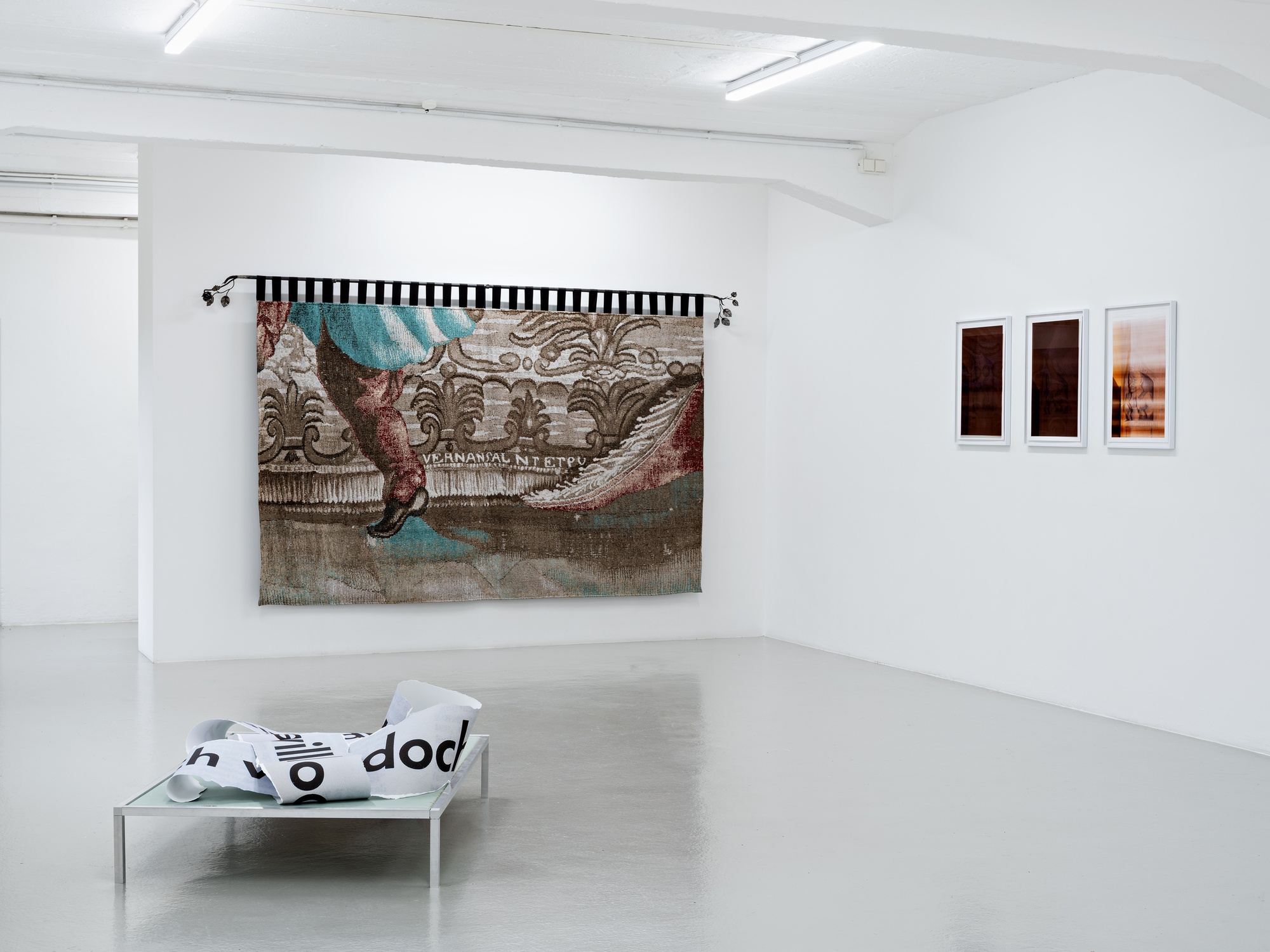
A Trillion Threads Still Weaving (Red Sock)
Installation View, 2024
A Trillion Threads Still Weaving (Red Sock)
Installation View, 2024
A Trillion Threads Still Weaving (Red Sock)
Installation View, 2024
A Trillion Threads Still Weaving, Reproductive Matters, Kunsthalle Bremen
Scroll Down for German
The group exhibition Reproductive Matters takes the concept of reproduction as its starting point in order to reflect, through five artistic positions, on its multiple meanings and their intersections.
Ana Navas addresses the origins and development of design and art objects in her sculptures through ideas of accessibility, commodification, imitation, and appropriation. In her tapestries, Zuzanna Czebatul reproduces excerpts from historical tapestries based on images from books or the internet. These fragments point to the hidden power-political meanings of cultural symbols. Daniel Poller reflects in his photographic practice on moments of historiography in public space, with a particular focus on the reconstruction of historical buildings. In her installation, Julia Lübbecke engages with the material qualities of political archives. Do archives reproduce the conditions they represent? Lucy Beech combines research on the cultural, social, and economic aspects of artificial reproduction with the experiences of the disoriented protagonist in her film Reproductive Exile (2018).
The selected works highlight different aspects of reproduction—whether the relationship between original and copy with its implicit systems of value, or the means of human and social reproduction.
German
Die Gruppenausstellung Reproductive Matters [dt. Reproduktionsfragen] nimmt den Begriff der Reproduktion zum Ausgangspunkt, um anhand von fünf künstlerischen Positionen über seine vielfältigen Bedeutungen und deren Überschneidungen zu reflektieren.
Ana Navas thematisiert in ihren Skulpturen die Entstehungs- und Entwicklungsgeschichte von Design- und Kunstobjekten anhand von Ideen der Zugänglichkeit, Kommodifizierung, Imitation und Aneignung. In den Wandteppichen von Zuzanna Czebatul reproduziert die Künstlerin Auszüge historischer Wandteppiche nach Bildern aus Büchern oder dem Internet. Die Ausschnitte verweisen auf die verborgenen machtpolitischen Bedeutungen kultureller Symbole. Daniel Poller reflektiert in seiner fotografischen Praxis Momente der Geschichtsschreibung im öffentlichen Raum mit besonderem Fokus auf die Rekonstruktion historischer Gebäude. Julia Lübbecke setzt sich in ihrer Installation mit den materiellen Qualitäten politischer Archive auseinander. Reproduzieren die Archive die Verhältnisse, die sie repräsentieren? Lucy Beech verbindet Recherchen zu kulturellen, sozialen und ökonomischen Aspekten der künstlichen Befruchtung mit den Erfahrungen der desorientierten Protagonistin ihres Films Reproductive Exile (2018).
Die ausgewählten Werke beleuchten verschiedene Aspekte der Reproduktion – sei es das Verhältnis von Original und Kopie mit den impliziten Wertzuschreibungen oder die Mittel der menschlichen und sozialen Reproduktion.
Photo: Fred Dott