Dazed
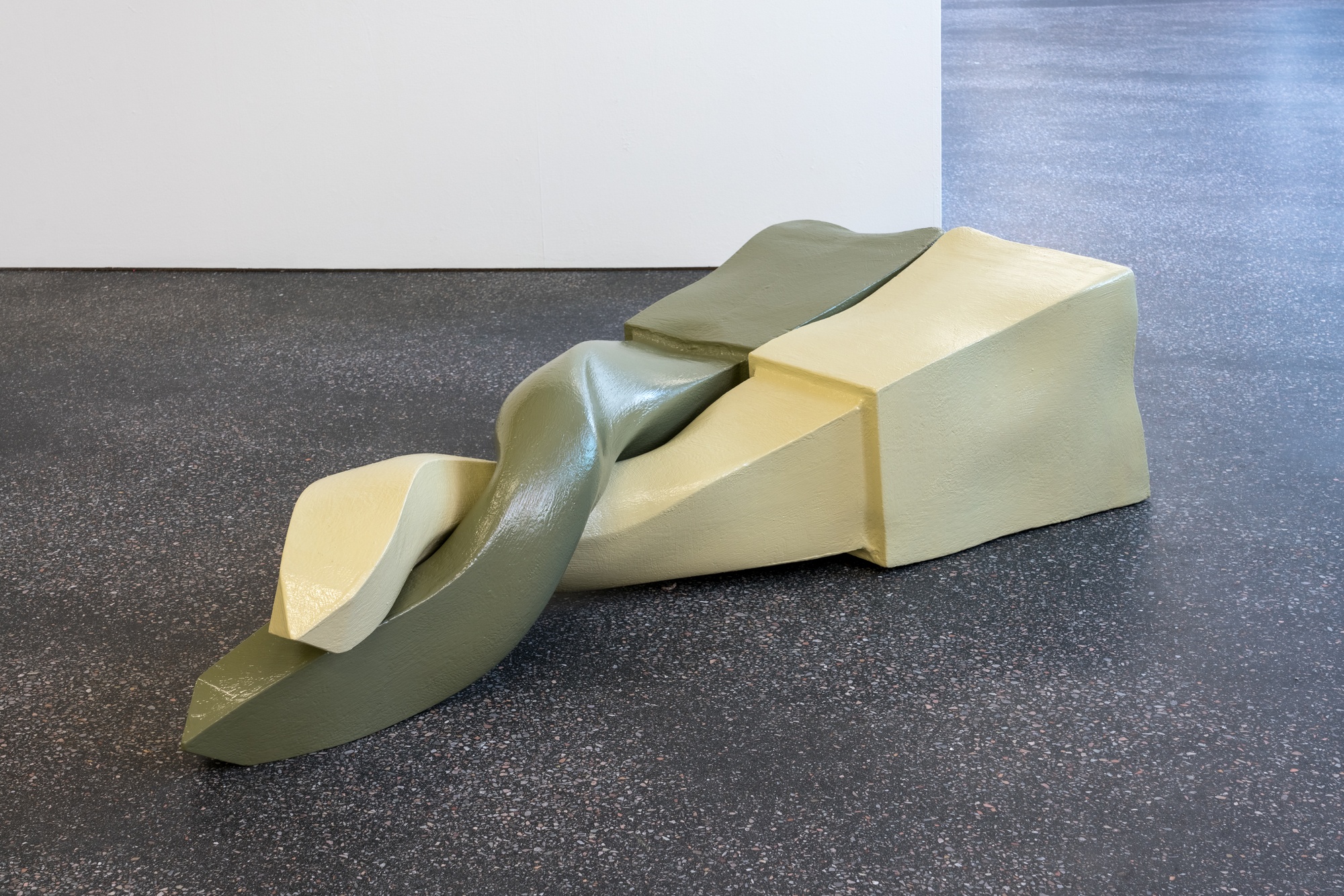
Installation View, 2020
Dazed
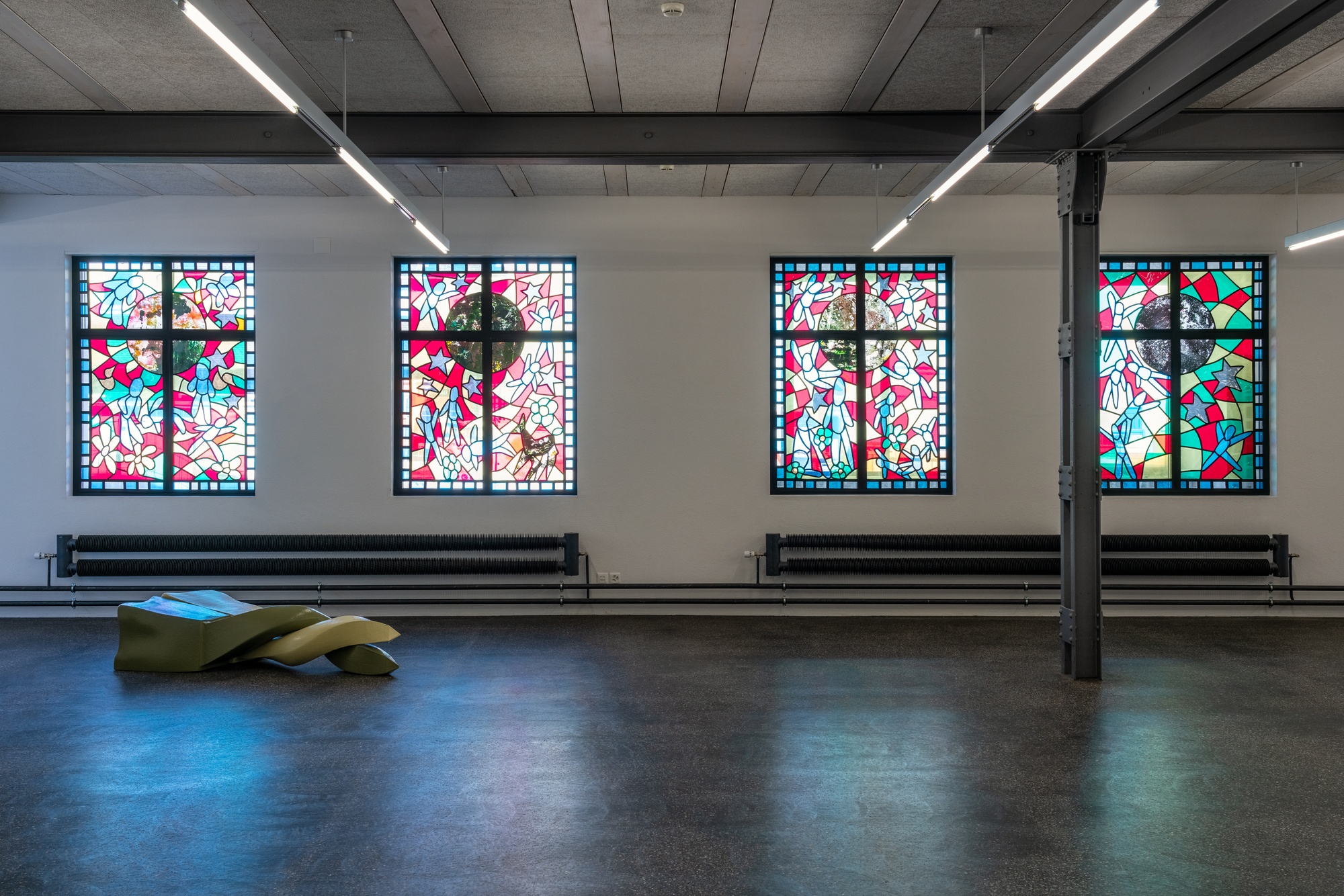
Installation View, 2020
Dazed, Schloss Rapperswil
Scroll Down for German
“Power is always [...] a power potential and not an unchangeable, measurable, and reliable entity like force or strength. [...] power springs up between men when they act together and vanishes the moment they disperse.”
Hannah Arendt — The Human Condition
Zuzanna Czebatul’s sculptures dismantle the ideological narratives of the triumphant and heroic to the point of collapse. For this exhibition, the artist was commissioned to produce a new iteration of her large-scale sculpture Twister (2018), two tightly embraced obelisks initially proposed as a public monument for the city of Warsaw, whose urban landscape has been shaped by the dominant sculptural and architectural manifestations of the patriarchal nation-state to this present day. In Daze (2020), the phallic monuments and symbols of power are still affectionately entangled and have now moved into the horizontal.
An homage to Madelon Vriesendorp’s painting Flagrant Delit (1978, English: Flagrant Crime) depicting a post coitus scene between the Chrysler Building and the Empire State Building used for the book cover of Rem Koolhaas’s publication Delirious New York (1978), Czebatul’s most recent sculpture has been conceived during a time that sees monuments of colonial violence torn down and demolished across the world, and gives rise to the formation of transnational solidarity opposing the recent anti-LGBT+ politics in Poland targeting queer activists for putting rainbow flags on public monuments throughout the country. In this light, Czebatul’s passionately entangled obelisks become an emblematic symbol for the desire of transmitting and monumentalizing pleasure and sexuality as acts of resistance.
German
„Macht ist immer [...] ein Machtpotenzial und keine unveränderliche, messbare und verlässliche Größe wie Kraft oder Stärke. [...] Macht entsteht zwischen Menschen, wenn sie gemeinsam handeln, und verschwindet in dem Moment, in dem sie auseinandergehen.“
Hannah Arendt — Vita activa oder Vom tätigen Leben
Zuzanna Czebatuls Skulpturen zerlegen die ideologischen Narrative des Triumphalen und Heroischen bis an den Punkt ihres Zusammenbruchs. Für diese Ausstellung wurde die Künstlerin beauftragt, eine neue Version ihrer großformatigen Skulptur Twister (2018) zu schaffen: zwei eng umschlungene Obelisken, die ursprünglich als öffentliches Monument für die Stadt Warschau vorgeschlagen wurden, deren Stadtbild bis heute von den dominanten skulpturalen und architektonischen Manifestationen des patriarchalen Nationalstaats geprägt ist. In Daze (2020) sind die phallischen Monumente und Machtsymbole weiterhin liebevoll ineinander verschlungen und haben sich nun in die Horizontale verlagert.
Als Hommage an Madelon Vriesendorps Gemälde Flagrant Delit (1978; englisch: Flagrant Crime), das eine Szene nach dem Geschlechtsakt zwischen dem Chrysler Building und dem Empire State Building zeigt und als Buchcover für Rem Koolhaas’ Publikation Delirious New York (1978) diente, entstand Czebatuls jüngste Skulptur in einer Zeit, in der Denkmäler kolonialer Gewalt weltweit gestürzt und abgebaut werden. Gleichzeitig formiert sich eine transnationale Solidarität gegen die jüngste anti-LGBT+-Politik in Polen, die sich gegen queere Aktivist*innen richtet, die Regenbogenflaggen an öffentlichen Denkmälern im ganzen Land anbringen. Vor diesem Hintergrund werden Czebatuls leidenschaftlich verschlungene Obelisken zu einem emblematischen Symbol für das Verlangen, Lust und Sexualität als Akte des Widerstands zu vermitteln und zu monumentalisieren.
Photo: Niklas Goldbach