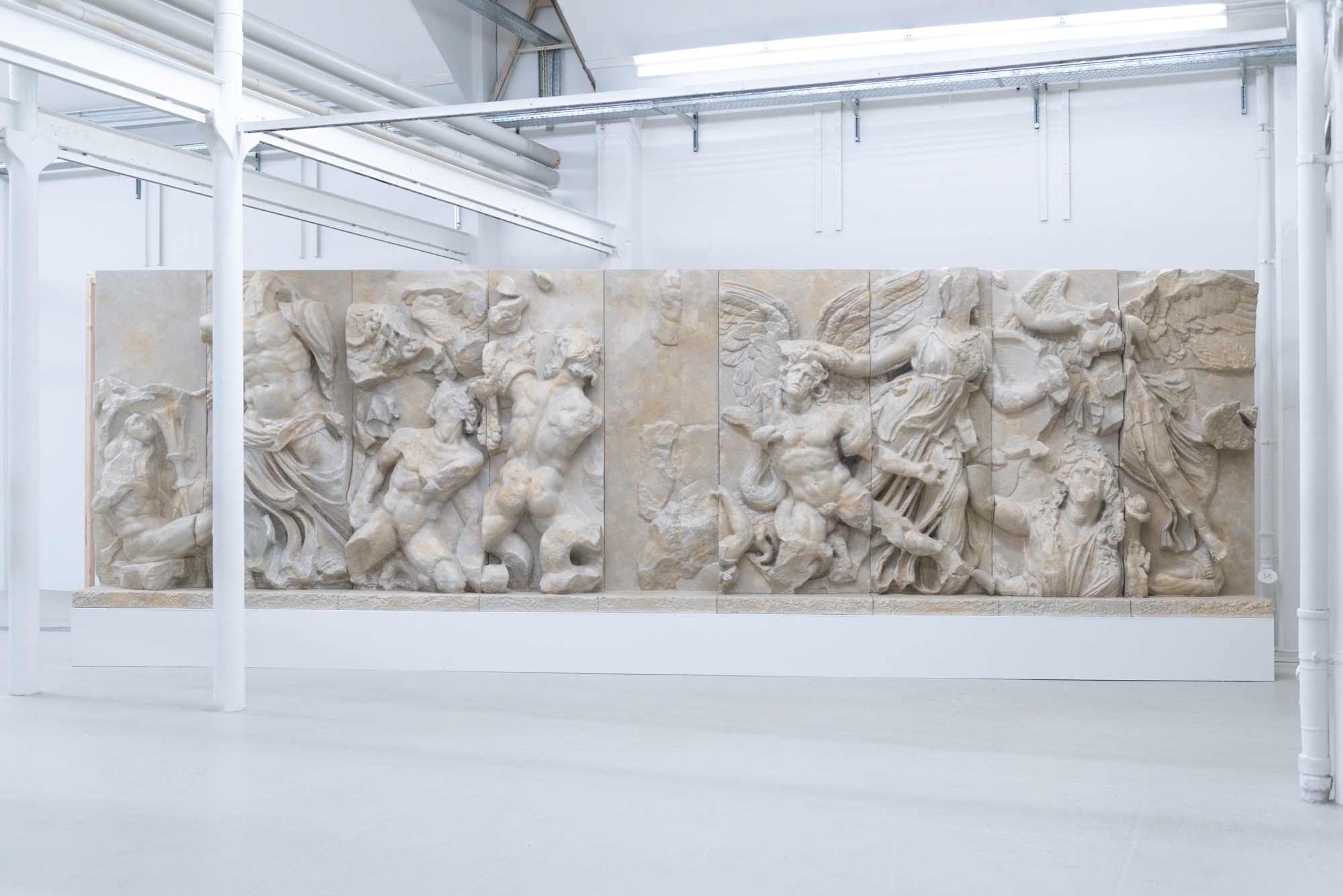
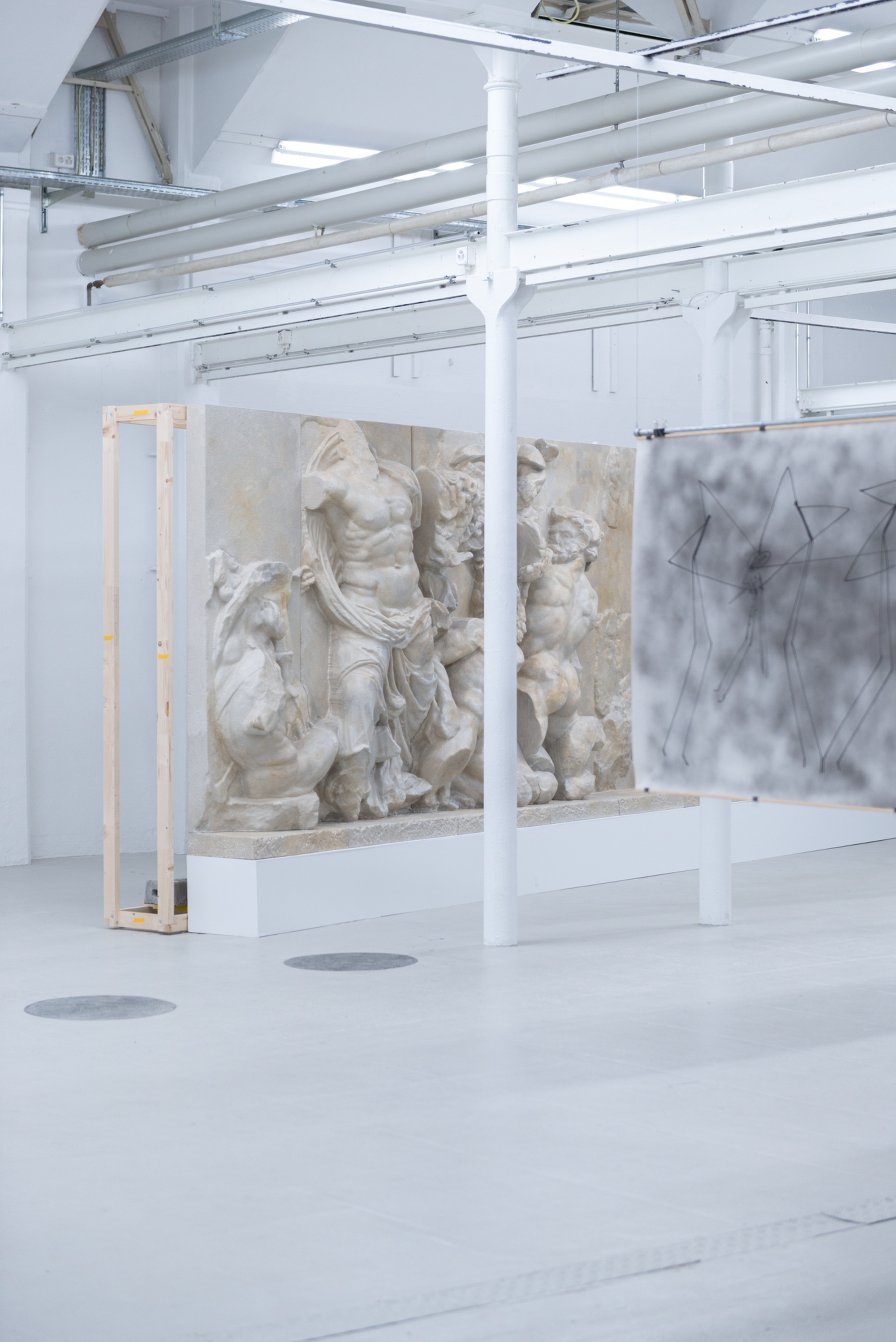
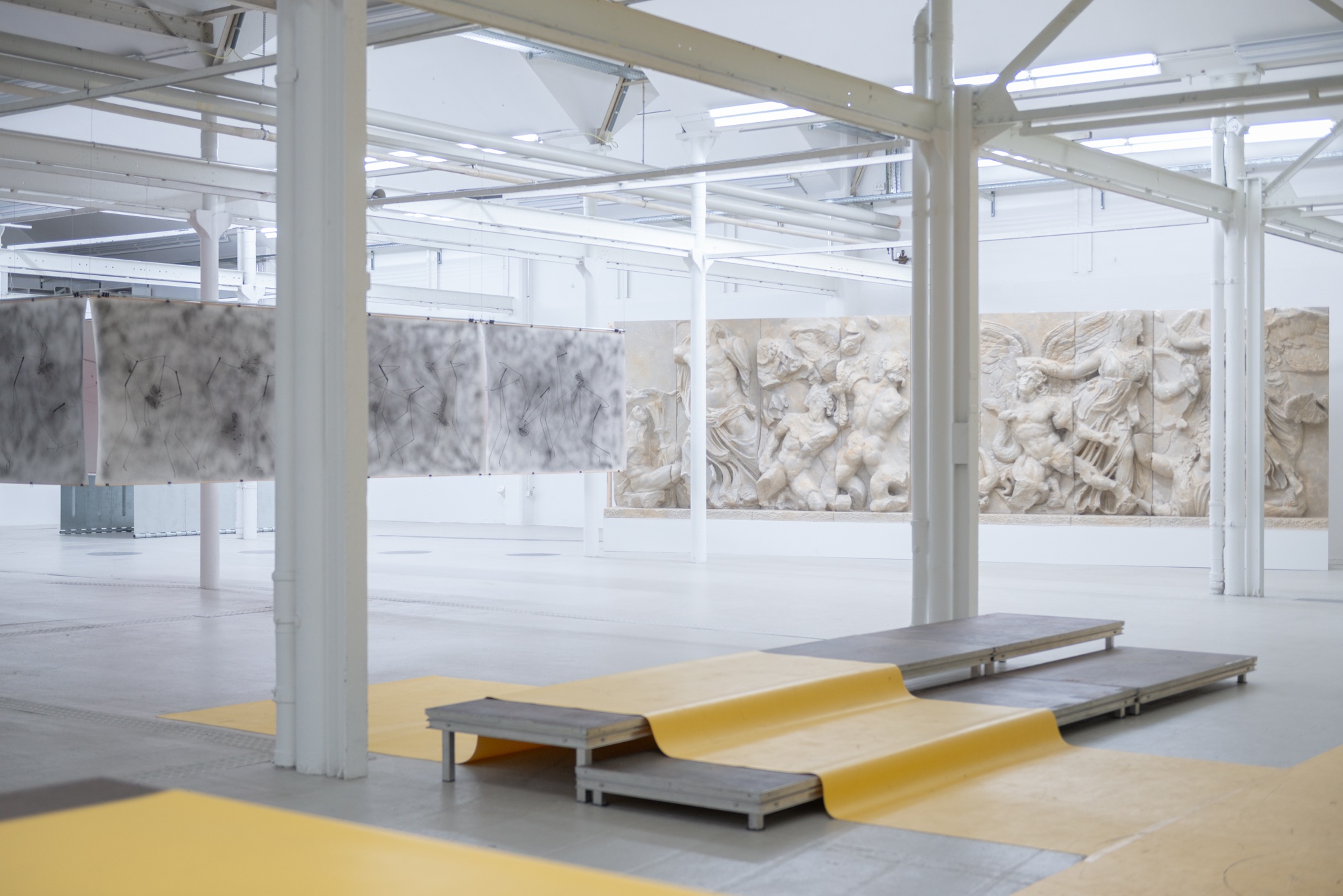
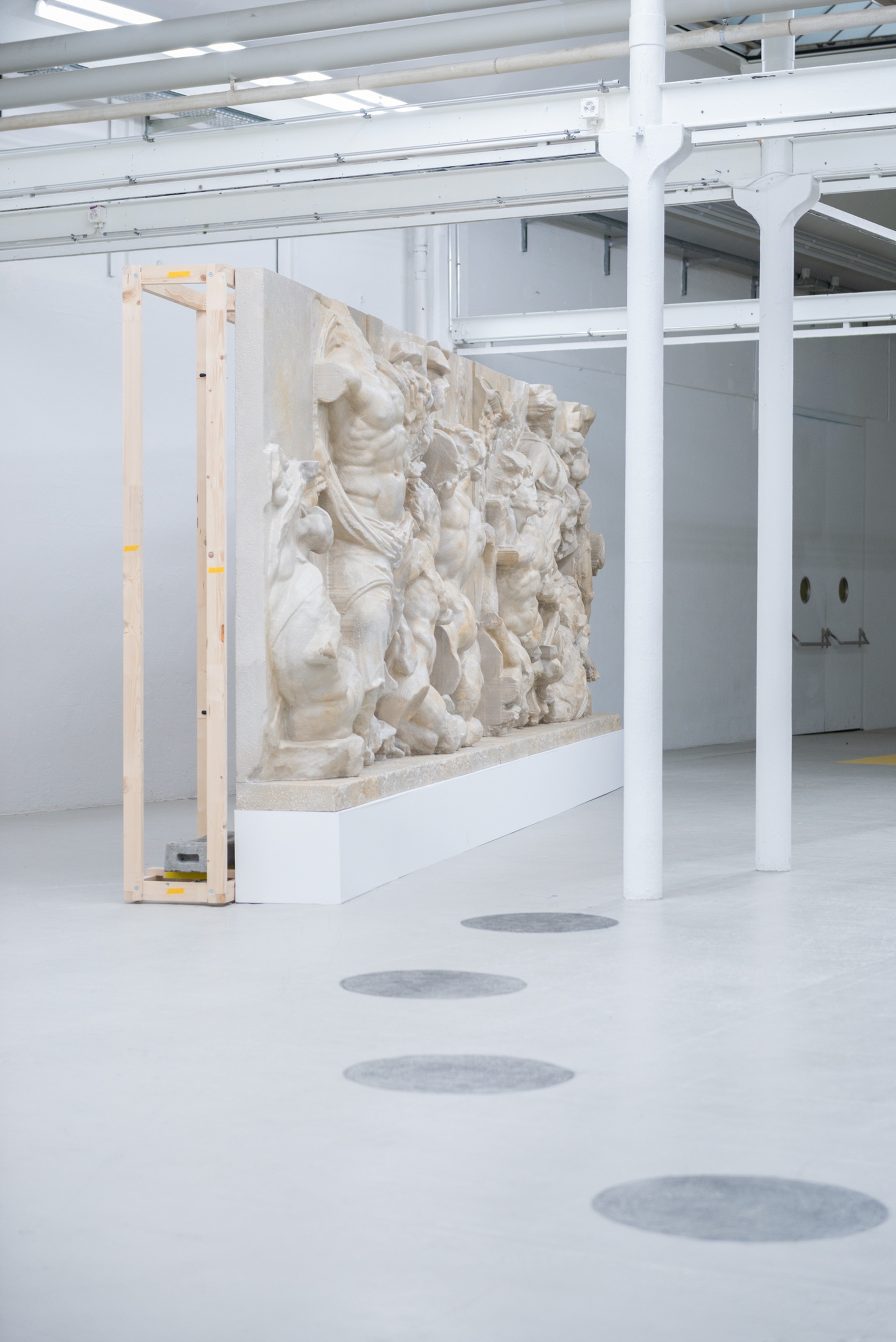
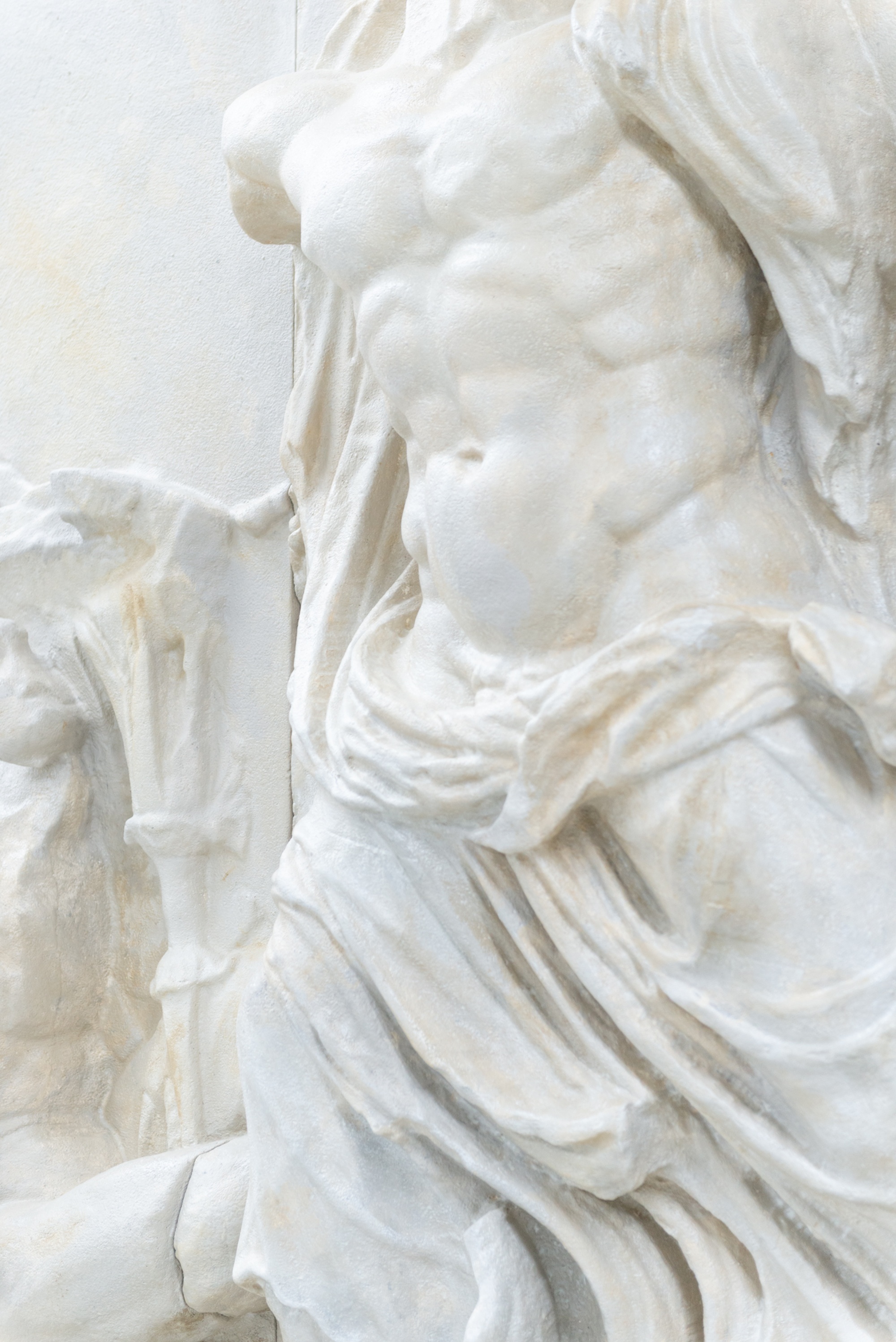
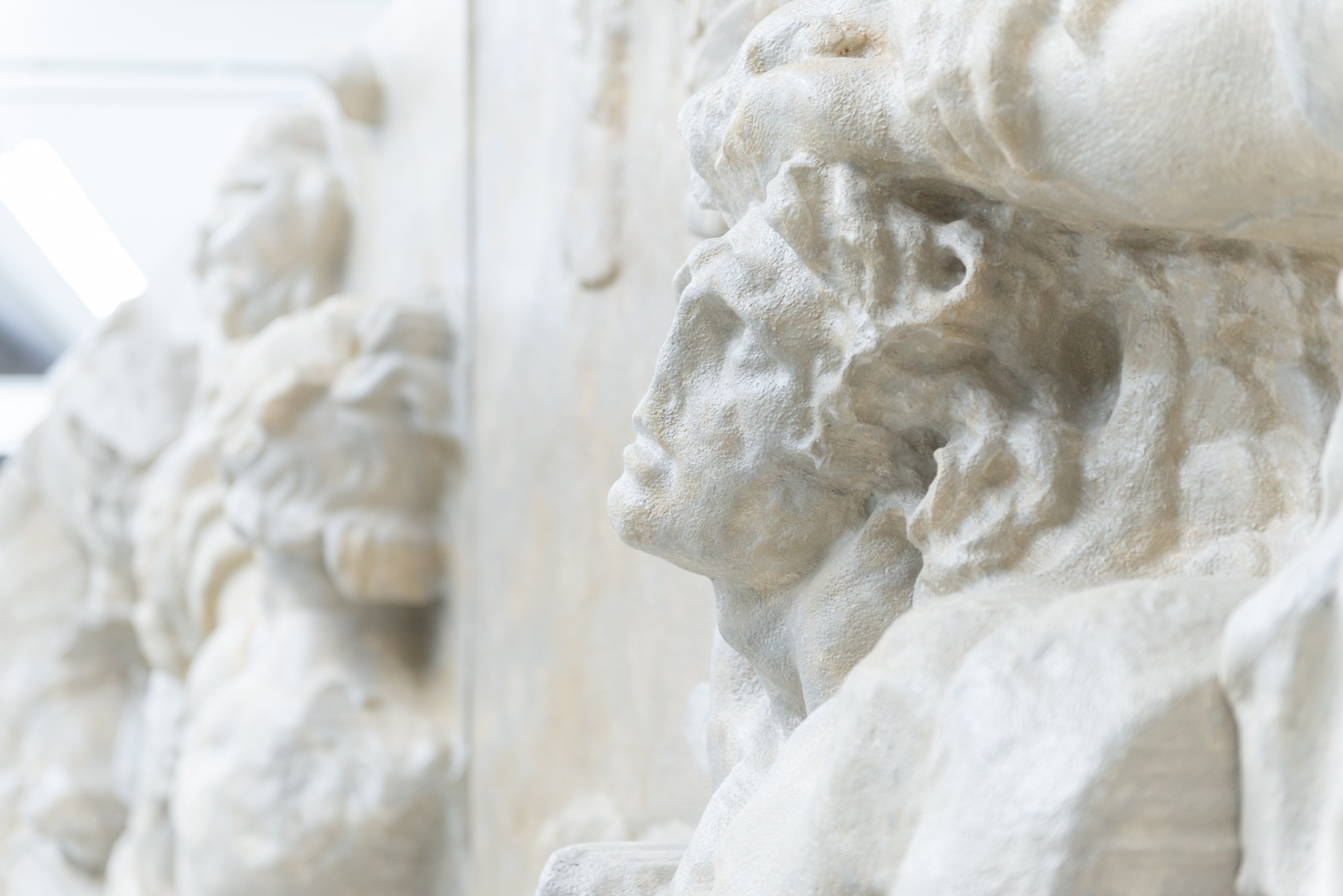
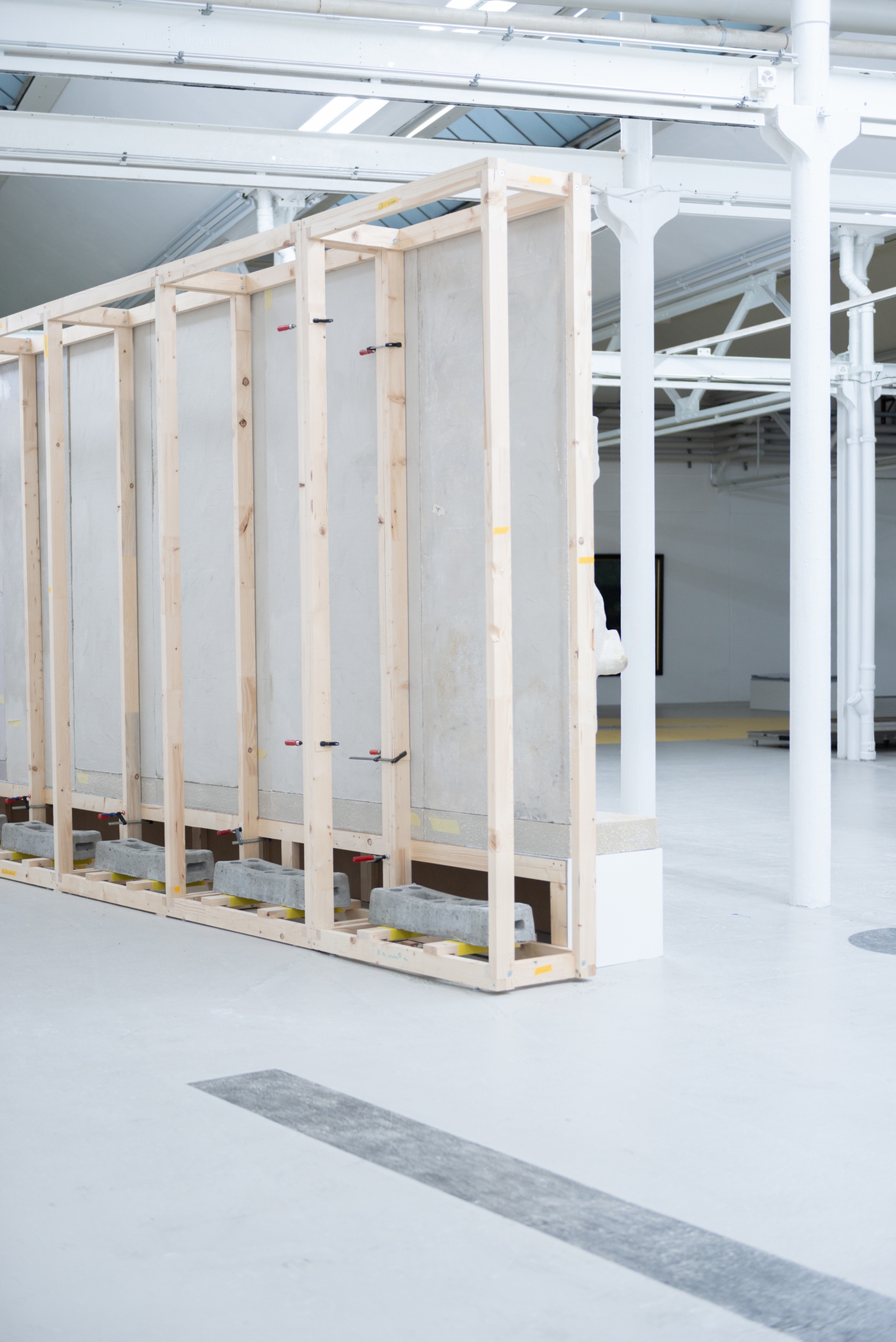
Heracles, Zeus, Porphyrion, Alkyoneus, Athena, Ge & Nike
Installation View, 2026
Heracles, Zeus, Porphyrion, Alkyoneus, Athena, Ge & Nike
Installation View, 2026
Heracles, Zeus, Porphyrion, Alkyoneus, Athena, Ge & Nike
Installation View, 2026
Heracles, Zeus, Porphyrion, Alkyoneus, Athena, Ge & Nike
Installation View, 2026
Heracles, Zeus, Porphyrion, Alkyoneus, Athena, Ge & Nike
Installation View, 2026
Heracles, Zeus, Porphyrion, Alkyoneus, Athena, Ge & Nike
Installation View, 2026
Heracles, Zeus, Porphyrion, Alkyoneus, Athena, Ge & Nike
Installation View, 2026
Hellenalgia, Vol. 1: EXHAUSTED, Shedhalle Zurich
Scroll Down For German
Hellenalgia joins Hellas to algos, the Greek word for pain that also ends nostalgia. Nostalgia aches for a home that was lost. Hellenalgia names the longing for one that was never inhabited: the classical antiquity that Europe assembled after the fact, out of Roman copies of lost Greek originals and ruins that later empires chose to leave standing. The ruin is intact enough to project onto and damaged enough to invite repair, so it works less as a remnant than as an interface. That longing is not neutral. Today it supplies much of the visual grammar for anyone promising to “make something great again.”
Vol. 1: Exhausted meets the classical repertoire at the point of depletion. Its supporting structures no longer support, and its forms keep circulating long after they stopped doing the work they were built for. Columns soften and melt. Other antiquities compete with the Greek one. Bodies decline the heroic pose and take up opacity, codeswitching and falling instead. Modern utopias appear as unfinished structures that are still lived in. The exhibition neither disqualifies the past nor restores it. It handles the past as material: contested, unfinished, still load-bearing.
German
Hellenalgia verbindet Hellas mit algos, dem griechischen Wort für Schmerz, das auch in Nostalgie steckt. Nostalgie ist die schmerzliche Sehnsucht nach einem verlorenen Zuhause. Hellenalgia bezeichnet die Sehnsucht nach einem, das nie bewohnt wurde: jener klassischen Antike, die Europa im Nachhinein aus römischen Kopien verlorener griechischer Originale und Ruinen zusammengesetzt hat, die spätere Imperien stehen liessen.
Die Ruine ist intakt genug, um als Projektionsfläche zu dienen, und beschädigt genug, um zur Reparatur einzuladen. So funktioniert sie weniger als Überrest denn als Schnittstelle. Diese Sehnsucht ist nicht neutral. Heute liefert sie einen grossen Teil der visuellen Grammatik für all jene, die versprechen, etwas “wieder gross machen zu wollen”.