Macromolecule Exploiting Some Biological Target (Rush/Revolution)
Installation View, 2022
Macromolecule Exploiting Some Biological Target (Rush/Revolution)
Installation View, 2022
Macromolecule Exploiting Some Biological Target (Rush/Revolution)
Installation View, 2022
Macromolecule Exploiting Some Biological, Jardin des Tuileries, Paris+ by Art Basel with sans titre Gallery
Scroll Down for German
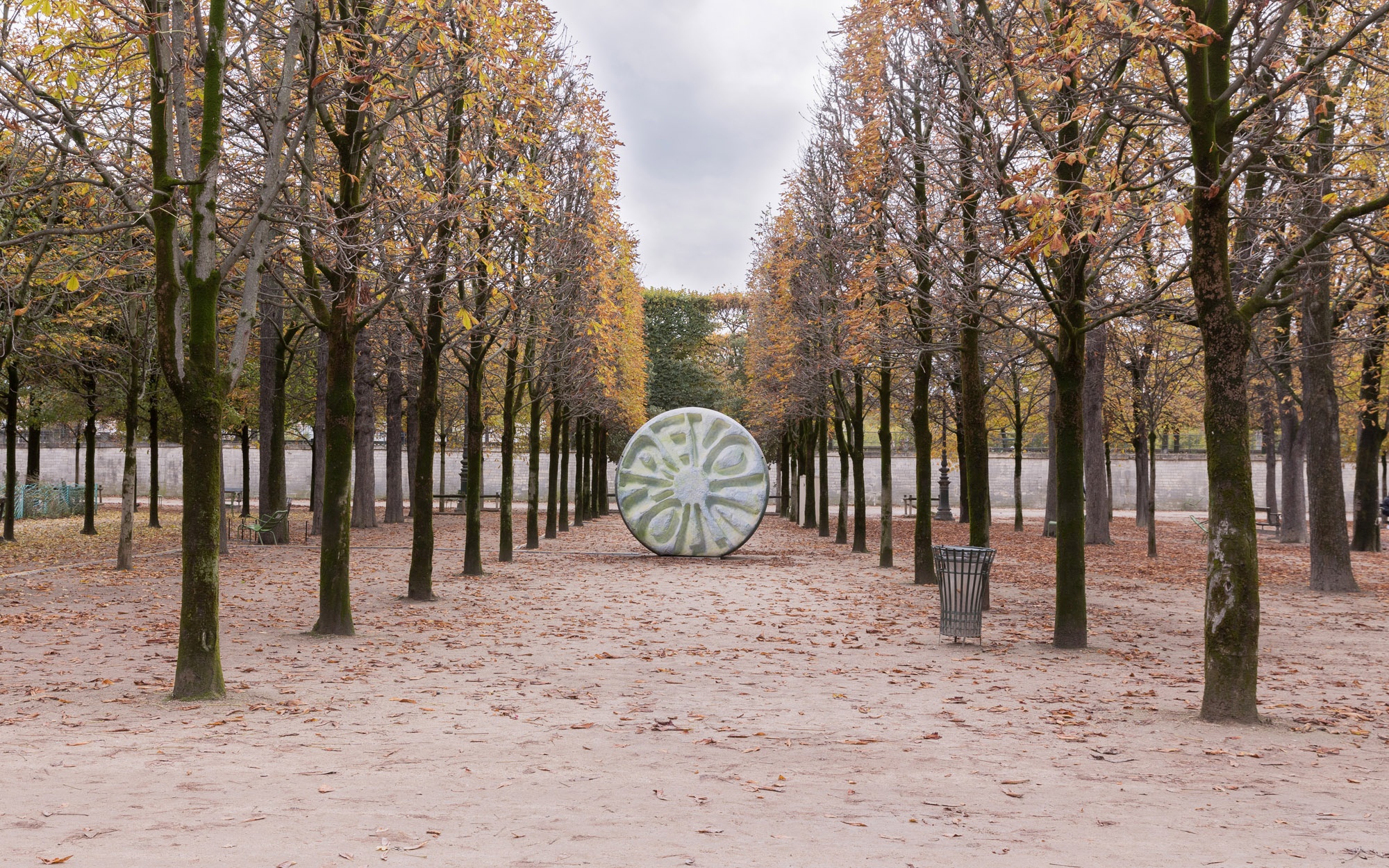
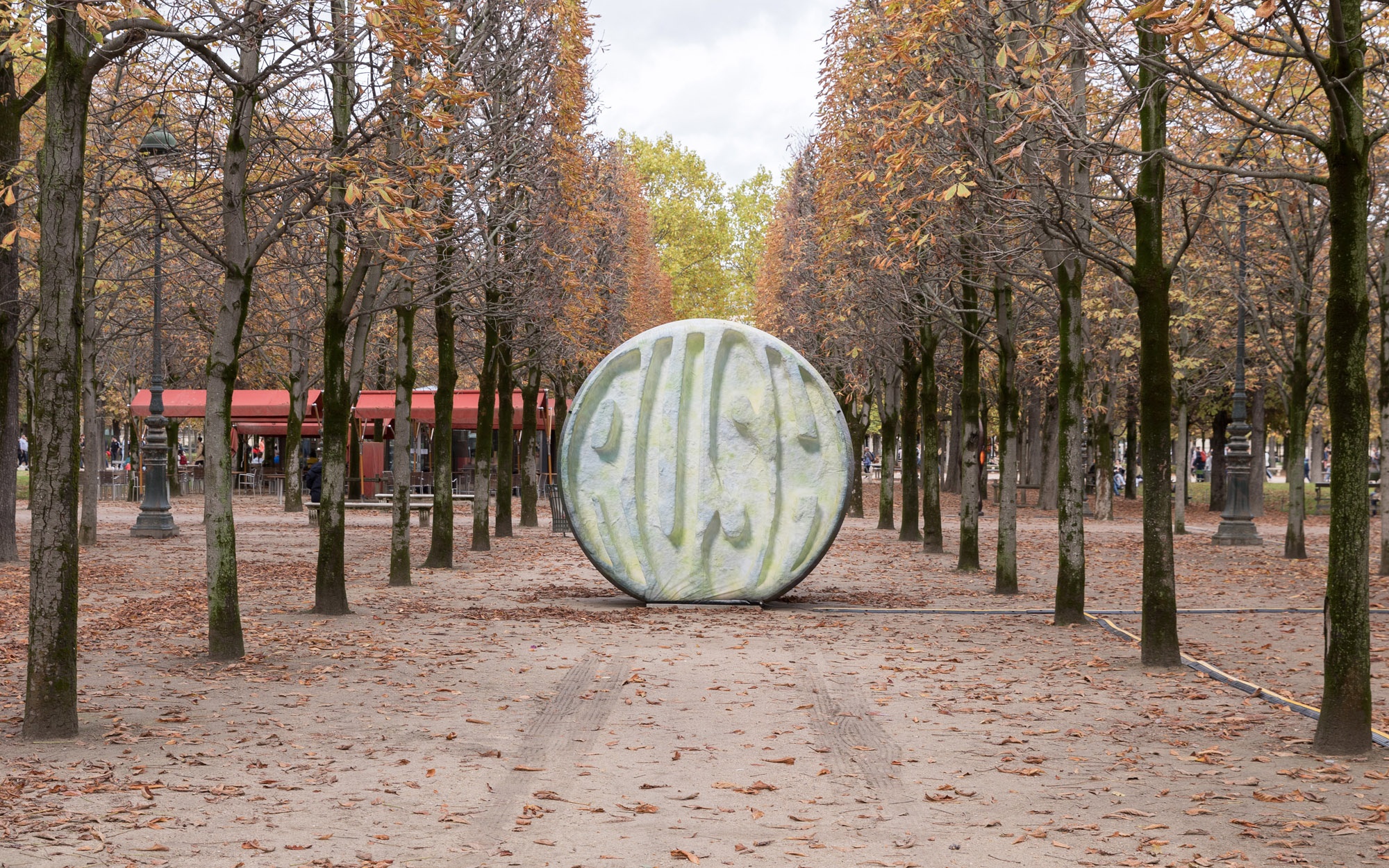
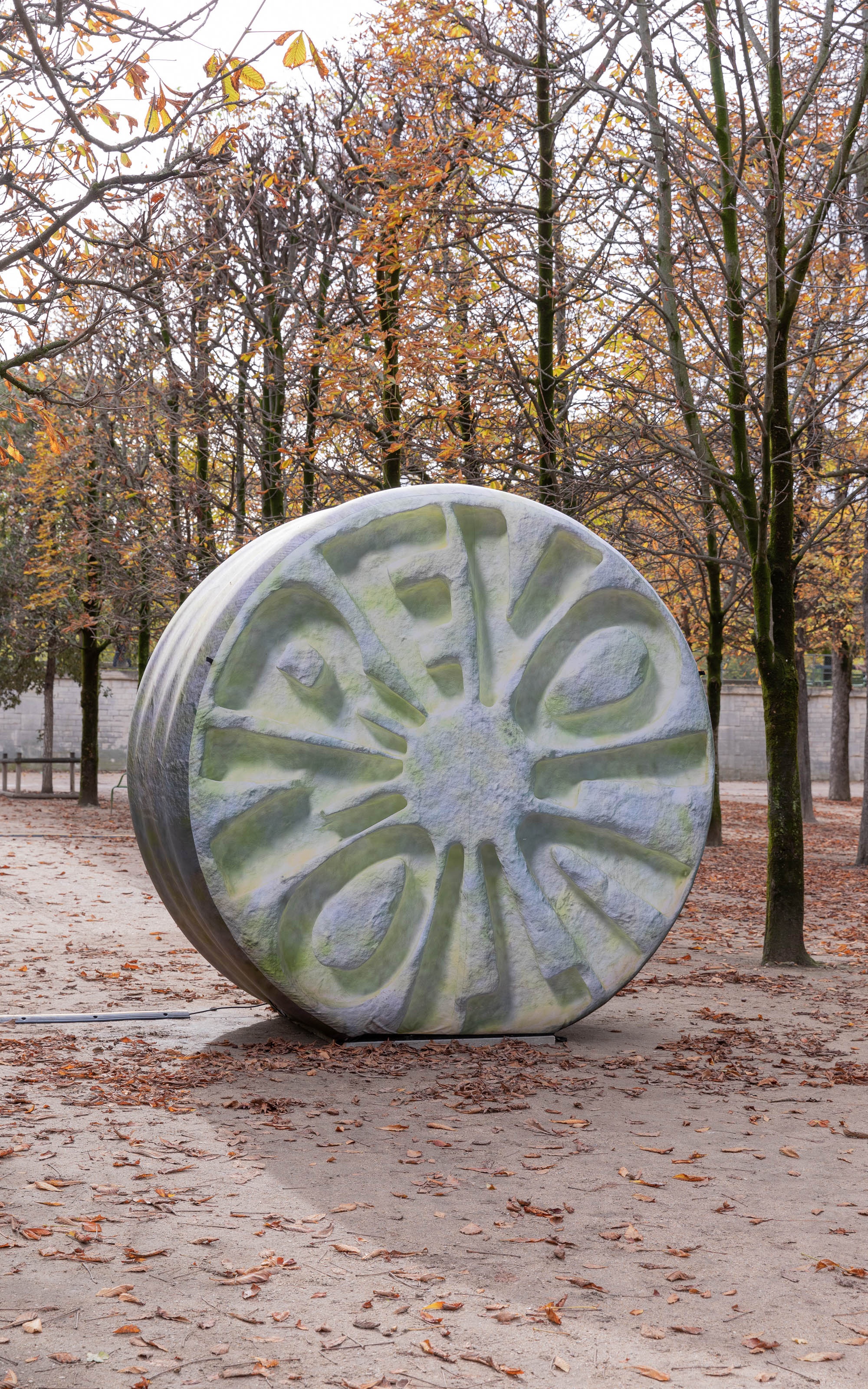
For Paris+ by Art Basel - Sites, Sans titre presents Macromolecule Exploiting some Biological Target, an outdoor installation by Polish artist Zuzanna Czebatul (born in 1986). The first sculpture of this series was produced in 2021 for the Goethe Institute and the second one was on view this year at the Geneva Biennale: Sculpture Garden. The artist has designed an air-filled, hyperreal and oversized venom- green ecstasy tablet with the words “Rush” and “Revolution” stamped on its sides. The work functions as a humorous as well as reflective monument to rave culture, especially that of the 1980s and 1990s.
In her works, sculptor Zuzanna Czebatul deconstructs the properties of materials and cultural symbols, exposing their underlying meanings. As a raver, bouncer and DJ herself, Czebatul has been an active part of Berlin’s club culture, drawing inspiration from the connections between pop culture, individual freedoms and social ideologies.
Driven by a generation that had already been socialised with lifestyle drugs thanks to the pharmaceutical industry, the synthetically produced, empathogenic drug MDMA, or ecstasy, enjoyed particularly great popularity in the clubs due to its disinhibiting and energising effects. The two terms used, “Rush” and “Revolution”, refer to the poles of the movement at the time, interpreting its social background. The trend of modern pharmaceutical products such as the birth-control pill, antidepressants and Valium is closely linked to the evolution towards a meritocracy, along with potential for acceleration and stress: the individual as part of a globalised world dominated by capital escapes from everyday life into collective timelessness and hedonistic rebellion. At the same time, the scene was characterised by a spirit of optimism and hope for technological progress and social transformation. The euphoria that makes ravers linger on the dance floor remains an expression of their non- conformist way of life, and of the club as a place of lived social utopia. Music, drugs and ravers still combine to form the iconic resonating bodies that are part of the collective memory of the techno movement.
The twist of acceleration and transformation is taken up formally by the typefaces Czebatul uses: “Rush” seems to stretch forward and take up space, while “Revolution” is wound in a circle, with such large letters that the word is nearly unrecognisable. In her work, the artist succeeds in visualising the dichotomy of 1990s club culture along with its seductive power. There’s still a persistent longing for those community-building clubbing moments today, but the hope for a sweeping social revolution has been dashed. Instead, small-scale utopias have formed in club spaces in recent years, defined by differentiated music genres, discourse on digital technologies and the conquest of unrestricted spaces that remain in urban areas. Here is where the subversive power of techno can still be found in the practices, aesthetics and a future-oriented desire for change.
German
Für Paris+ by Art Basel – Sites präsentiert Sans titre Macromolecule Exploiting some Biological Target, eine Außeninstallation der polnischen Künstlerin Zuzanna Czebatul (geboren 1986). Die erste Skulptur dieser Serie entstand 2021 für das Goethe-Institut, die zweite war in diesem Jahr bei der Genfer Biennale: Sculpture Garden zu sehen. Die Künstlerin hat eine luftgefüllte, hyperrealistische und überdimensionale Ecstasy-Pille in Giftgrün entworfen, auf deren Seiten die Worte „Rush“ und „Revolution“ eingeprägt sind. Das Werk fungiert sowohl als humoristisches als auch nachdenkliches Denkmal der Rave-Kultur, insbesondere der 1980er- und 1990er-Jahre.
In ihren Arbeiten dekonstruiert die Bildhauerin Zuzanna Czebatul die Eigenschaften von Materialien und kulturellen Symbolen und legt deren zugrunde liegende Bedeutungen frei. Als selbst Raverin, Türsteherin und DJ ist Czebatul seit Jahren aktiv in der Berliner Clubkultur, wobei sie Inspiration aus den Verbindungen zwischen Popkultur, individueller Freiheit und sozialen Ideologien zieht.
Getrieben von einer Generation, die bereits durch die Pharmaindustrie mit Lifestyle-Drogen sozialisiert worden war, erfreute sich das synthetisch hergestellte, empathogene MDMA bzw. Ecstasy insbesondere in Clubs großer Beliebtheit, da es enthemmend und energetisierend wirkte. Die beiden Begriffe „Rush“ und „Revolution“ beziehen sich auf die Pole der Bewegung zu dieser Zeit und interpretieren deren sozialen Hintergrund. Der Trend moderner Pharmazeutika wie der Antibabypille, Antidepressiva und Valium ist eng mit der Entwicklung hin zu einer Meritokratie verbunden, ebenso mit Potenzial für Beschleunigung und Stress: Das Individuum als Teil einer globalisierten, vom Kapital dominierten Welt flieht aus dem Alltag in kollektive Zeitlosigkeit und hedonistische Rebellion. Gleichzeitig war die Szene geprägt von einem Geist des Optimismus und der Hoffnung auf technologischen Fortschritt und sozialen Wandel. Die Euphorie, die Raver auf der Tanzfläche verweilen lässt, bleibt Ausdruck ihrer nonkonformen Lebensweise und des Clubs als Ort gelebter sozialer Utopie. Musik, Drogen und Raver bilden weiterhin ikonische Resonanzkörper, die Teil des kollektiven Gedächtnisses der Techno-Bewegung sind.
Die Wendung von Beschleunigung und Transformation greift Czebatul auch formal über die von ihr verwendeten Schriftarten auf: „Rush“ scheint nach vorne zu strecken und Raum einzunehmen, während „Revolution“ im Kreis gewunden ist, mit so großen Buchstaben, dass das Wort fast unleserlich wird. In ihrer Arbeit gelingt es der Künstlerin, die Dichotomie der Clubkultur der 1990er-Jahre sowie ihre verführerische Kraft zu visualisieren. Die Sehnsucht nach diesen gemeinschaftsstiftenden Club-Erlebnissen ist bis heute spürbar, doch die Hoffnung auf eine umfassende soziale Revolution hat sich zerschlagen. Stattdessen haben sich in den letzten Jahren kleinteilige Utopien in Clubräumen gebildet, geprägt durch differenzierte Musikgenres, Diskurse über digitale Technologien und die Eroberung unbegrenzter städtischer Räume. Hier zeigt sich nach wie vor die subversive Kraft des Techno in Praktiken, Ästhetik und einer zukunftsorientierten Sehnsucht nach Veränderung.
Images: courtesy of Paris+ by Art Basel