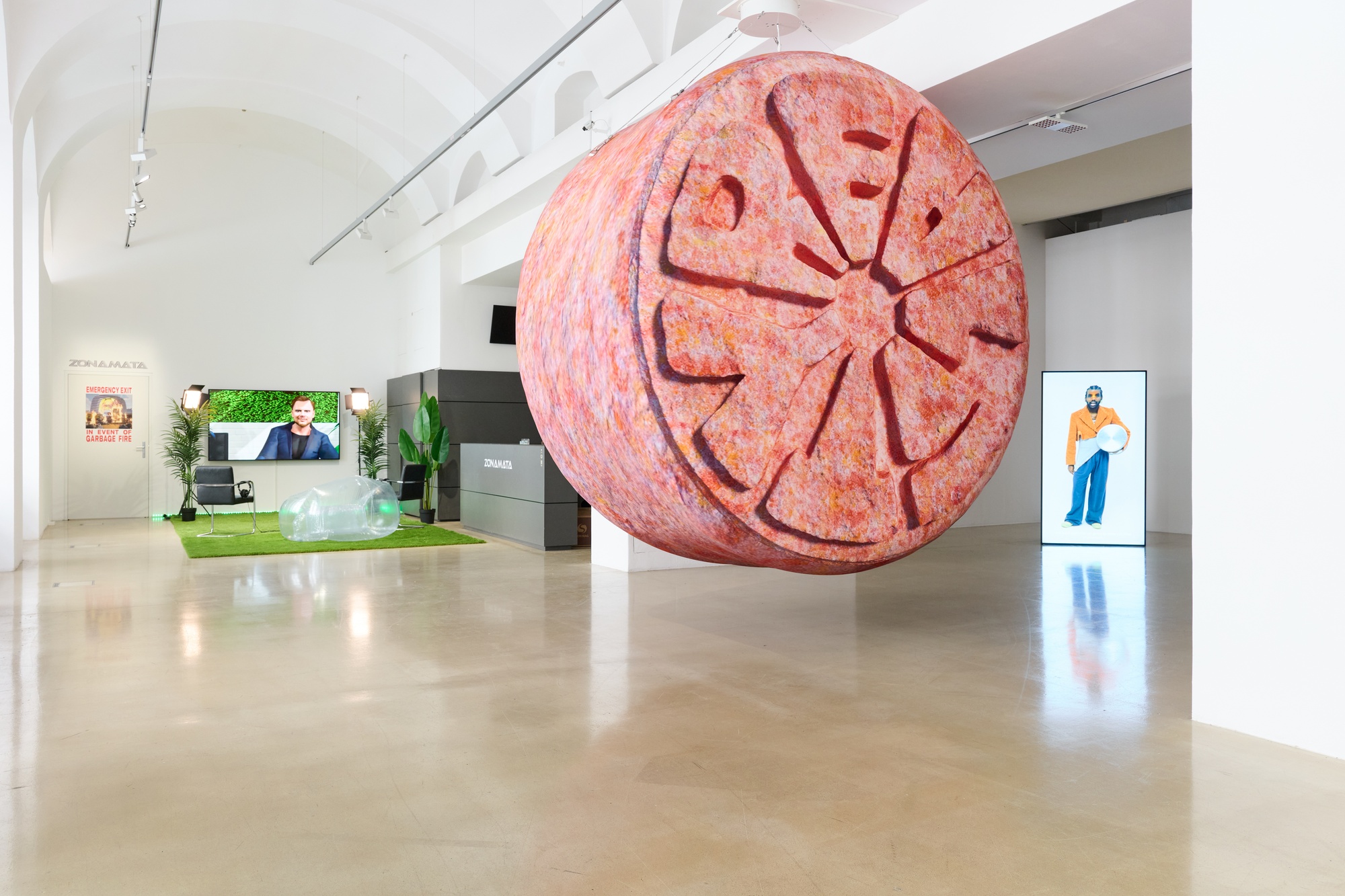
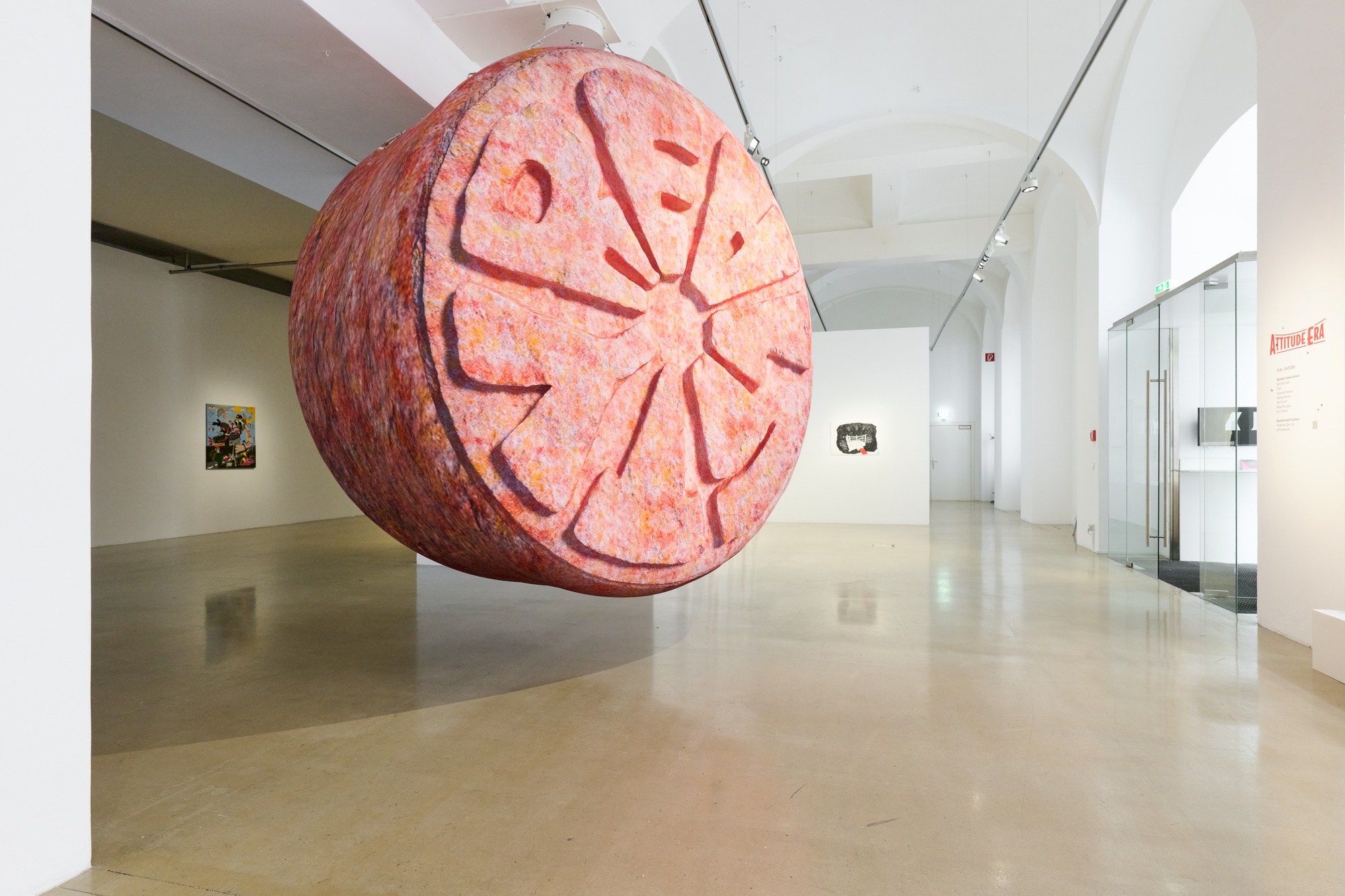

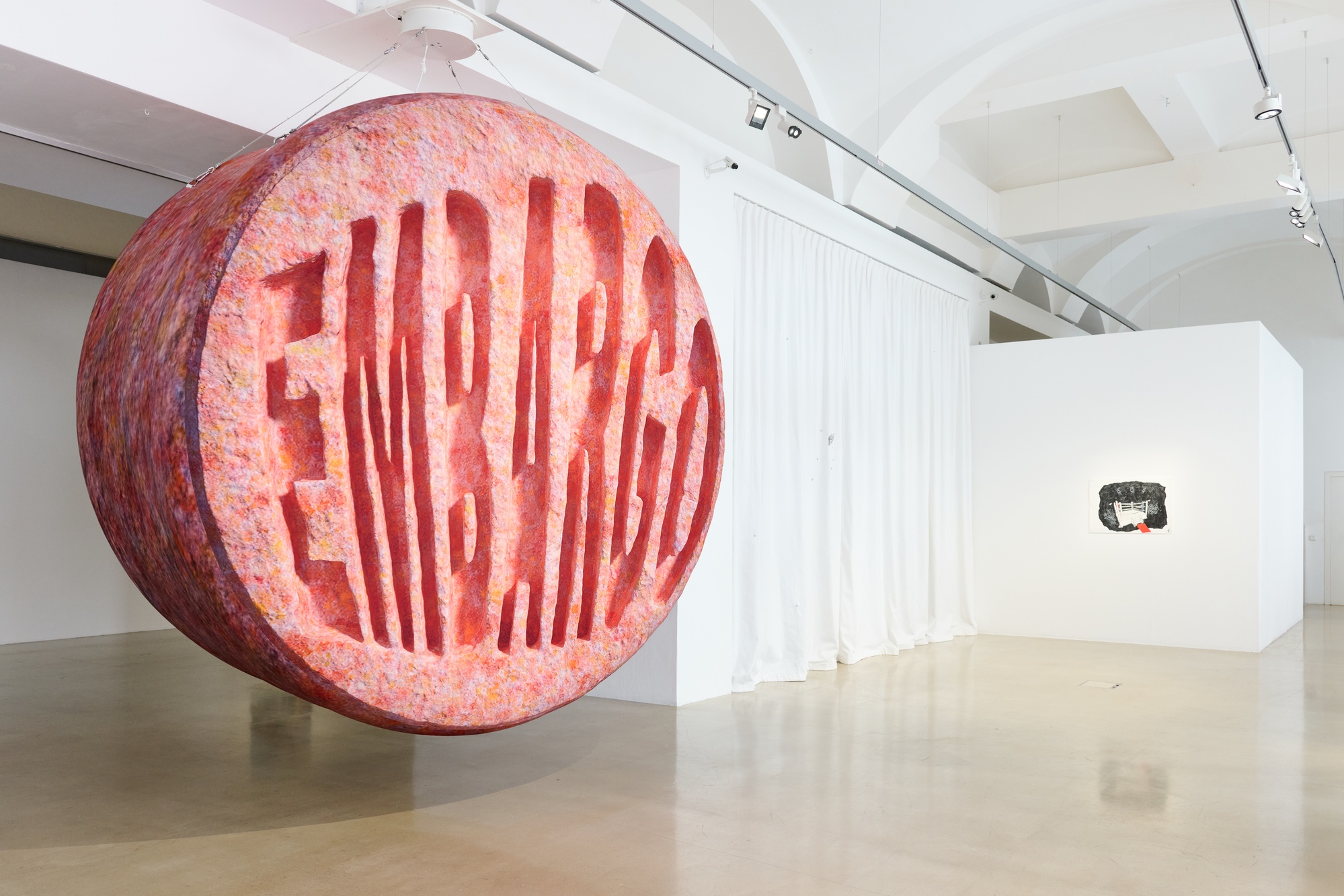
Macromolecule Exploiting Some Biological Target (Reality/Embargo)
Installation View, 2026
Macromolecule Exploiting Some Biological Target (Reality/Embargo)
Installation View, 2026
Macromolecule Exploiting Some Biological Target (Reality/Embargo)
Installation View, 2026
Macromolecule Exploiting Some Biological Target (Reality/Embargo)
Installation View, 2026
Attitude Era at Kunstraum Niederösterreich, Vienna
Scroll Down For German
Fact or Fake? In the group exhibition Attitude Era, co-curated by Frederike Sperling and Pia Wamsler, the art space ventures into the murky depths of the post-truth age.
Algorithms, as we know, have a flexible relationship with truth. Whether a statement is true or false is of little concern to them. What matters is what captures users’ attention. It is no coincidence that populism has been so successful in the digital sphere. Algorithms reward content that polarizes, triggers fears, calls facts into question, or deliberately creates its own “alternative facts” – from fake news and migration to climate change denial. What counts is the effect. And above all, that effect has to be one thing: engaging.
To better understand this transformation of communication into spectacle, it is worth taking a look at the world of wrestling. In her 2023 book Ringmaster about US wrestling tycoon Vince McMahon, writer Abraham Josephine Riesman describes the spectacle of professional wrestling as a vast machine for rendering reality unreal. In wrestling, Riesman argues, the boundaries between reality and fiction are systematically blurred. The result: spectators learn to flexibly adjust their perception to the twists and turns of the spectacle, accepting one thing as reality at one moment and another the next, regardless of logic or meaning. Reality as a matter of mindset – this is the logic behind the digital realities that flood our newsfeeds every day. Here, as in wrestling, the rule is: what is true is what appeals. Attitude is everything.
Politics and spectacle, fact and fiction, manipulation and dissociation – these are the coordinates between which the group exhibition Attitude Era unfolds. Seven artistic positions explore the relationship between reality and fiction in an age of slopaganda, deepfakes, and Trumpism.
German
Fakt oder Fake? In der von Frederike Sperling und Pia Wamsler ko-kuratierten Gruppenausstellung Attitude Era begibt sich der Kunstraum in die Niederungen des Post-Truth-Zeitalters.
Algorithmen haben zur Wahrheit bekanntlich ein flexibles Verhältnis. Ob eine Aussage wahr oder unwahr ist, spielt für sie keine Rolle. Entscheidend ist, was die Aufmerksamkeit der User*innen fesselt. Nicht ohne Grund ist der Populismus digital so erfolgreich. Algorithmisch belohnt werden Inhalte, die polarisieren, Ängste triggern, Fakten in Frage stellen oder gezielt eigene „alternative Fakten“ schaffen – von Fake News über Migration bis zur Leugnung der Klimakrise. Was zählt, ist der Effekt. Und der muss vor allem eines sein: engaging.
Um diese Verwandlung von Kommunikation in Spektakel besser zu verstehen, lohnt sich ein Blick in die Welt des Wrestlings. In ihrem Buch Ringmaster (2023) über den US-Wrestling-Tycoon Vince McMahon beschreibt die Publizistin Abraham Josephine Riesman den Showkampfsport als gewaltige Irrealisierungsmaschine. Im Wrestling, so Riesman, werden die Grenzen zwischen Realität und Fiktion systematisch verwischt. Die Folge: Die Zuschauer*innen lernen, ihr Bewusstsein flexibel den Wendungen des Spektakels anzupassen, mal dieses und mal jenes als Wirklichkeit zu akzeptieren, ungeachtet von Logik oder Sinn. Realität als Mindset-Frage – diesem Kalkül folgen auch die digitalen Wirklichkeitsangebote, die täglich unsere Newsfeeds fluten. Hier wie im Wrestling gilt: Wahr ist, was gefällt. Attitude ist alles.
Politik und Showkampf, Fakt und Fake, Manipulation und Dissoziation – zwischen diesen Koordinaten bewegt sich die Gruppenausstellung Attitude Era. Sieben künstlerische Positionen beleuchten darin das Verhältnis von Realität und Fiktion in Zeiten von Slopaganda, Deepfakes und Trumpismus.
photo: Markus Gradwohl