T-Kollaps
Installation View, 2024
T-Kollaps
Installation View, 2024
T-Kollaps
Installation View, 2024
T-Kollaps
Installation View, 2024
T-Kollaps
Installation View, 2024
T-Kollaps, Bally Foundation
Scroll Down for German
The decay of the Parthenon is subject of reflection pursued within the Exhibition T-Kollaps. “T” stands for “temple” and “Kollaps” means “collapse”. Travellers from Europe and other corners of the world who visit the limestone hill in Athens today encounter ruins of the ancient temple complex. Likewise, the concept of democracy has changed its meanings throughout the millennia. Humankind has enjoyed ample opportunities to put its various models to test, some more successful than others.
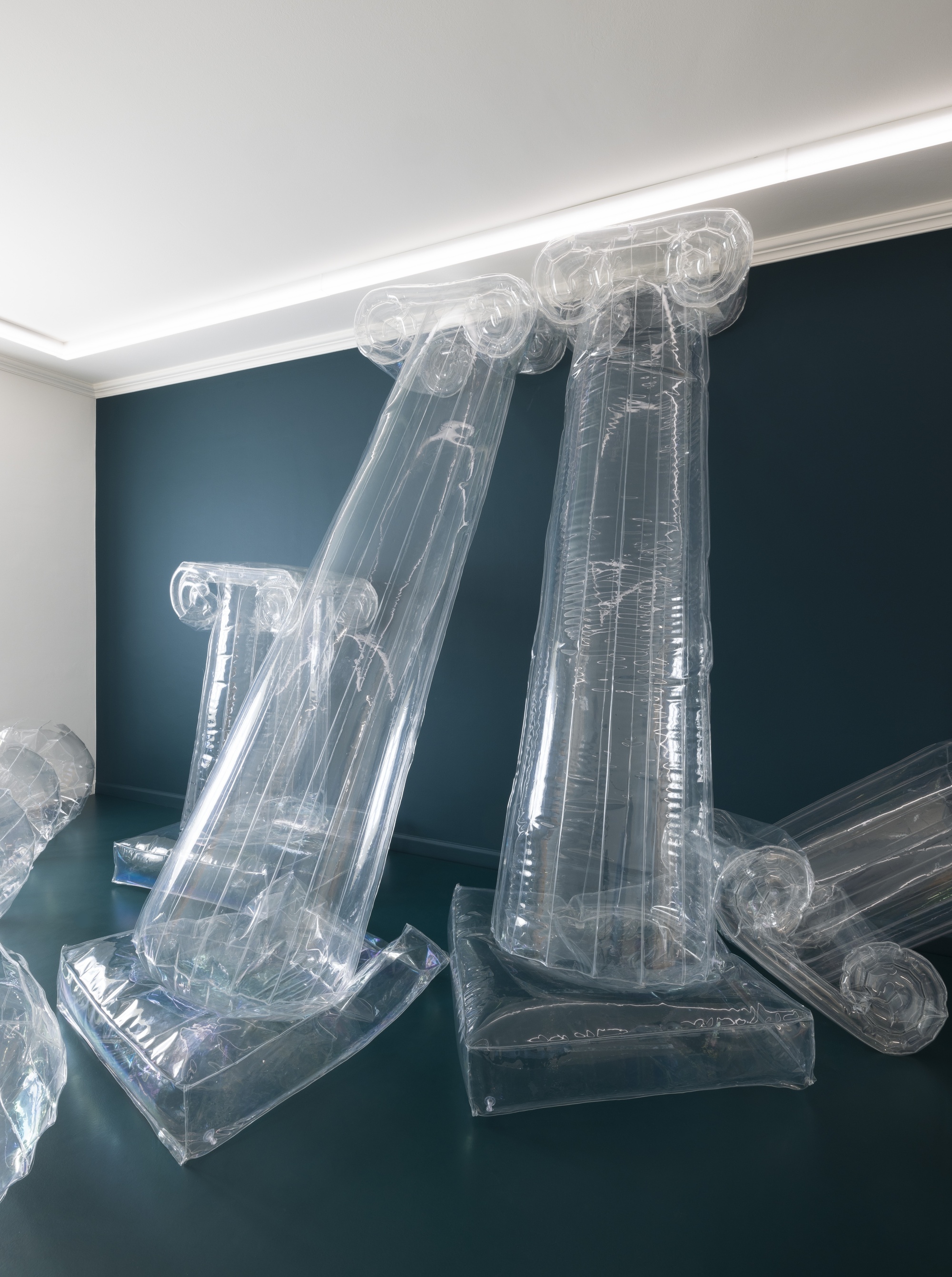
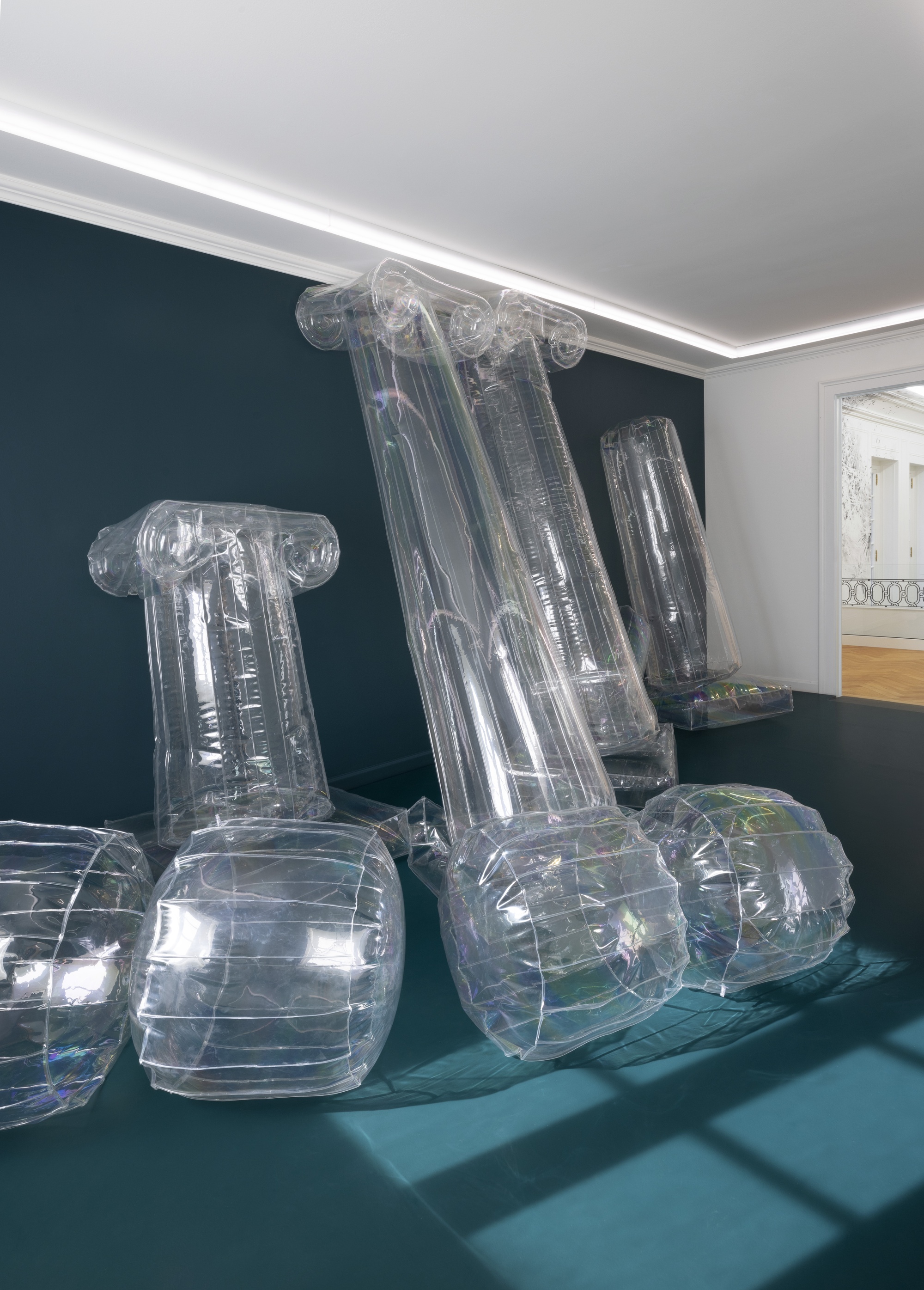
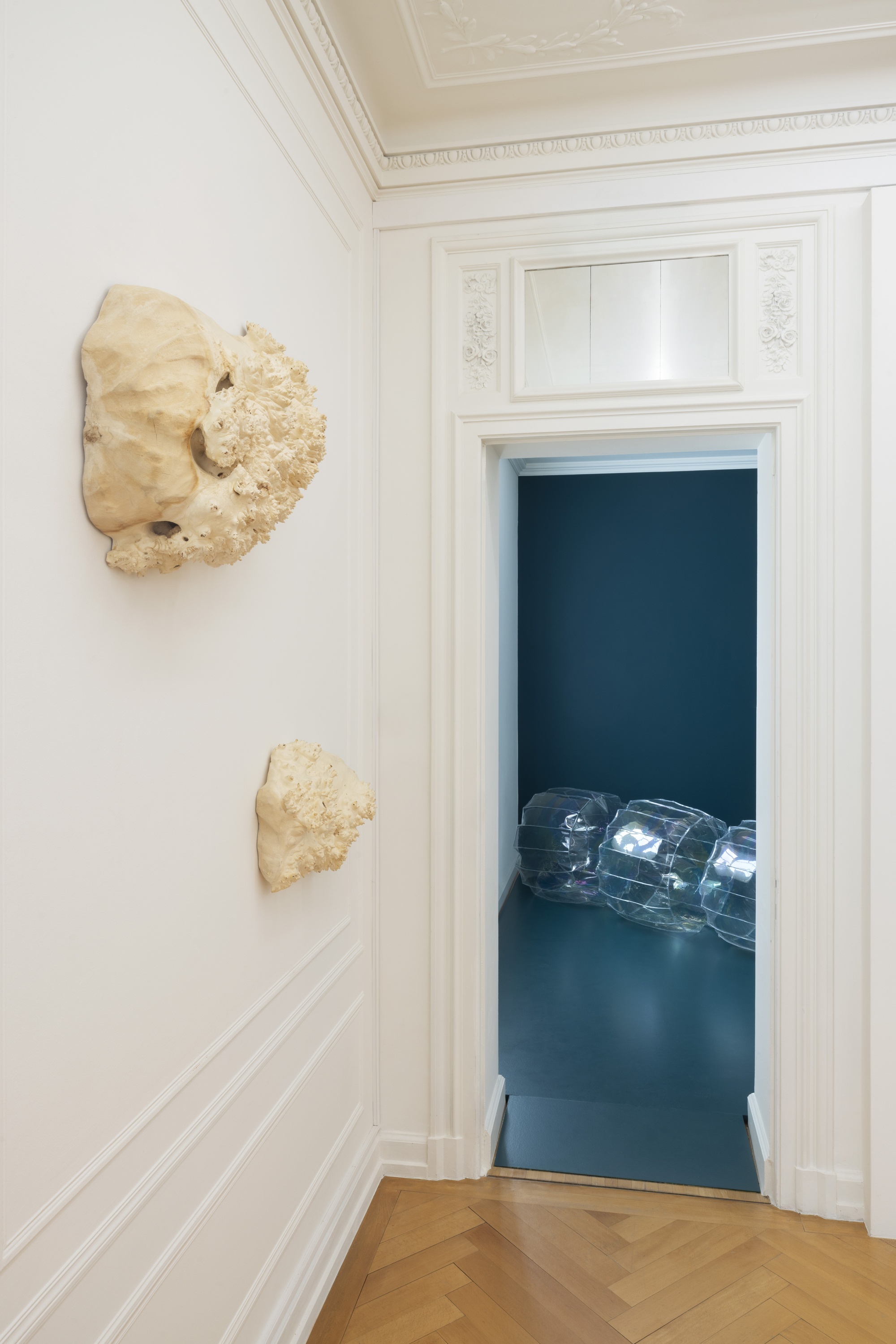
New social classes and groups, ongoing evolution interrupted by revolutions – all of this shapes the democratic regimes known today. The global idea of democracy – demos and kratos, “power of the people” – has many local variations. It is similar to the Greek orders carved in marble, which – although defined and measured – were actually assembled of spatial collages of their own selves as a result of decisions and efforts of those who created them. The Installation T-Kollaps evokes ancient canons. The artist fills the interior of the gallery’s scarlet space with inflated toy-columns as if elements of ancient ruins suffering decay.
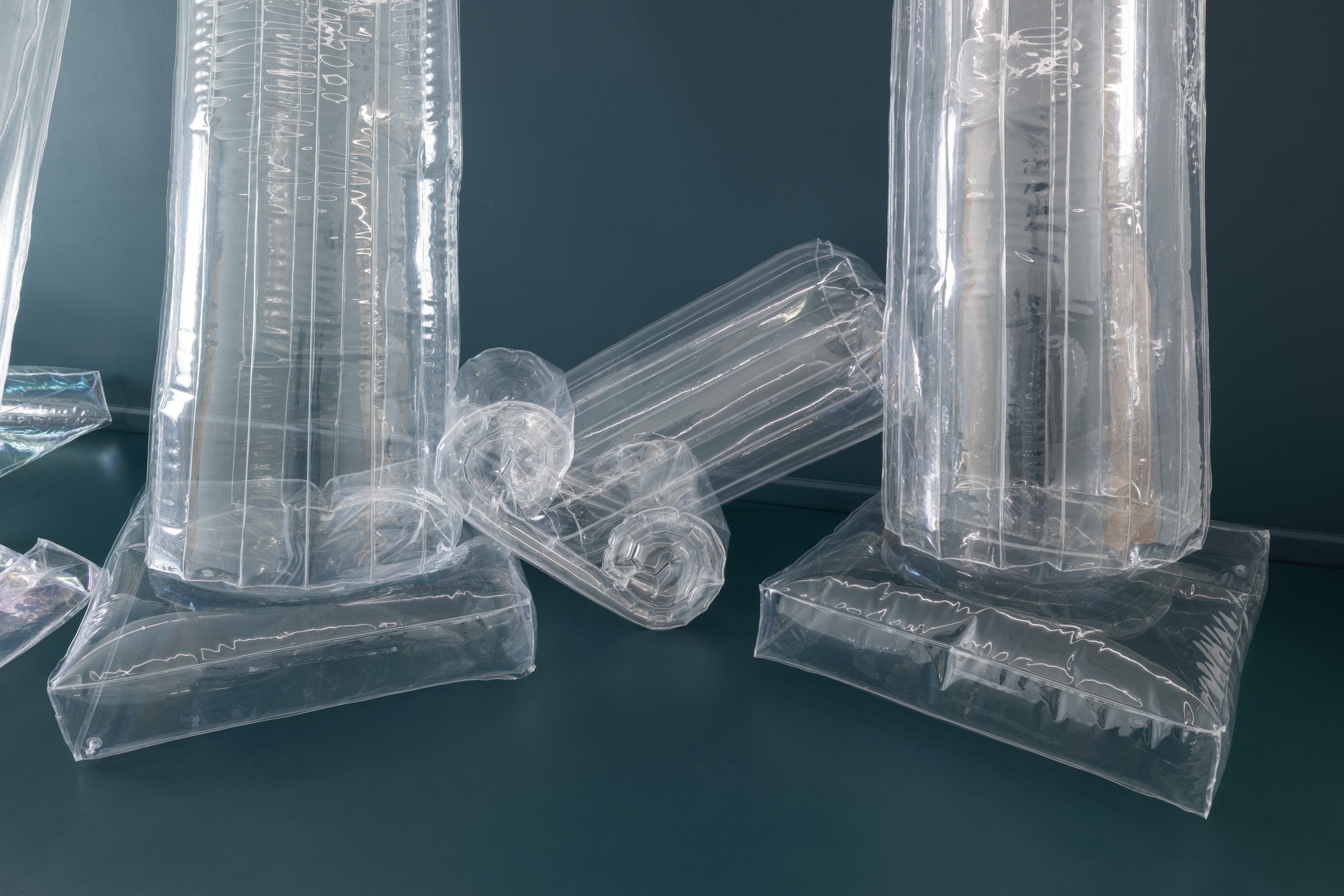
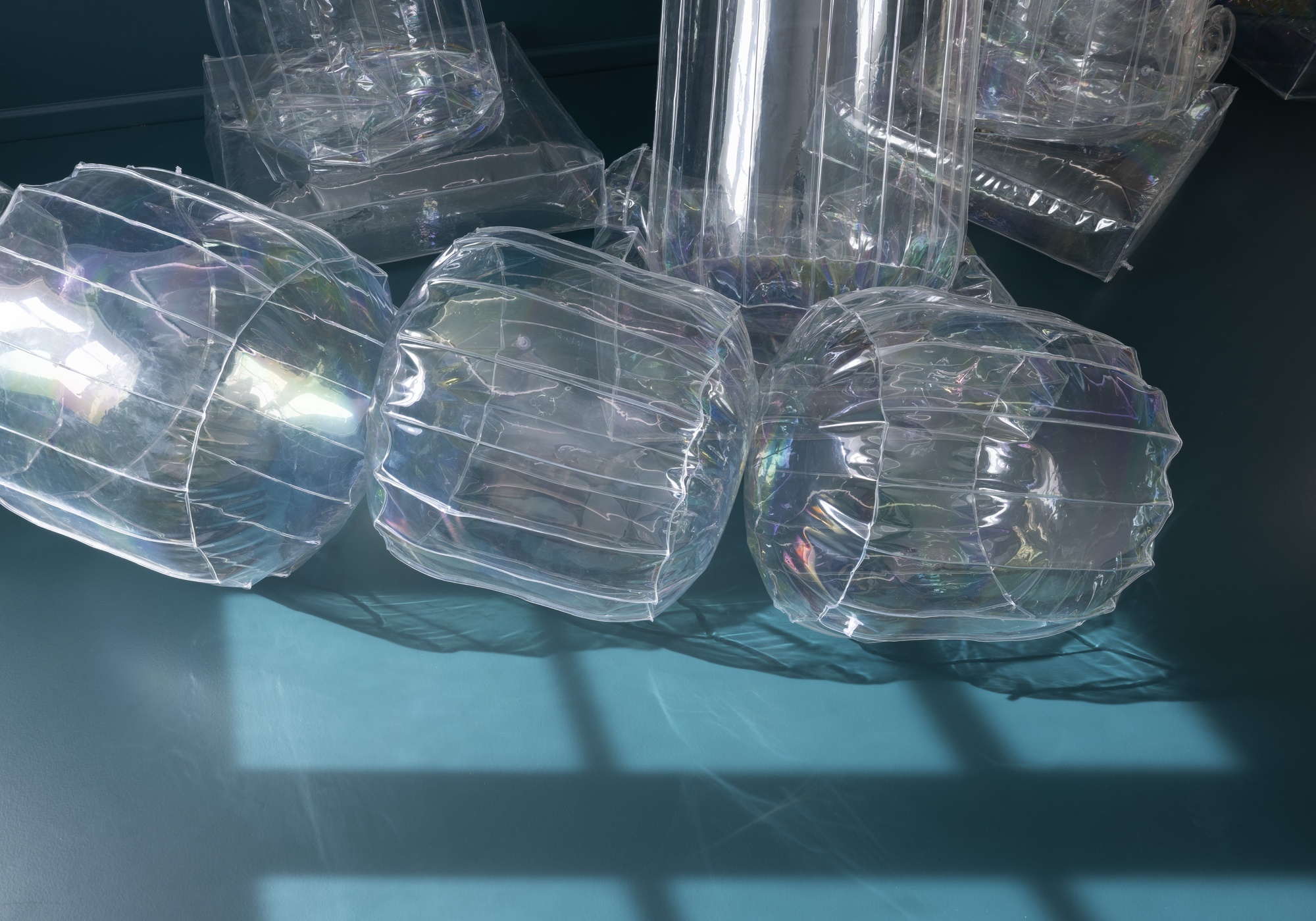
Czebatul replaces hard classic marble from Pentelicus with softly transparent and thermoplastic polyethylene, thus bringing to mind the changes that the ancient idea of the Greek state has undergone. As she disassembles the orders and uses their parts to build new structures, the components become deflated. They are now flexible and lose their shape. We are taken to a massive playground, an inflated theme park of ideas. Paradoxically enough, it was built of elements that used to make up a temple dedicated to gods worshipped by ancient Greeks.
German
Der Verfall des Parthenon ist Gegenstand der Reflexion, die in der Ausstellung T-Kollaps verfolgt wird. Das „T“ steht für „Tempel“ und „Kollaps“ bedeutet „Zusammenbruch“. Reisende aus Europa und anderen Teilen der Welt, die heute den Kalksteinhügel in Athen besuchen, begegnen den Ruinen des antiken Tempelkomplexes. Ebenso hat sich das Konzept der Demokratie im Laufe der Jahrtausende in seiner Bedeutung verändert. Die Menschheit hatte zahlreiche Gelegenheiten, ihre unterschiedlichen Modelle zu erproben – manche erfolgreicher, andere weniger.
Neue soziale Klassen und Gruppen, kontinuierliche Entwicklungen, unterbrochen durch Revolutionen – all dies prägt die heute bekannten demokratischen Regime. Die globale Idee der Demokratie – demos und kratos, „Macht des Volkes“ – kennt viele lokale Ausprägungen. Sie ähnelt den griechischen Ordnungen, die in Marmor gemeißelt wurden und obwohl definiert und vermessen, tatsächlich aus räumlichen Collagen ihrer eigenen Teile zusammengesetzt wurden, als Ergebnis der Entscheidungen und Bemühungen derjenigen, die sie geschaffen haben. Die Installation T-Kollaps ruft diese antiken Kanons in Erinnerung. Die Künstlerin füllt das Innere des scharlachroten Galerieraums mit aufgeblasenen Spielzeug-Säulen, als wären sie Elemente antiker Ruinen im Zerfall.
Czebatul ersetzt das harte klassische Pentelikum-Marmor durch weich-transparentes, thermoplastisches Polyethylen und erinnert damit an die Veränderungen, die die antike Idee des griechischen Staates erfahren hat.
Indem sie die Ordnungen auseinandernimmt und ihre Teile nutzt, um neue Strukturen zu bauen, werden die Komponenten entleert. Sie sind nun flexibel und verlieren ihre Form. Wir werden in einen riesigen Spielplatz geführt, einen aufgeblasenen Themenpark der Ideen. Paradoxerweise besteht er aus Elementen, die einst einen Tempel bildeten, der den von den alten Griechen verehrten Göttern geweiht war.
Photo: Andrea Rossetti