Vortex (New Day Coming)
Installation View, 2020
Vortex (New Day Coming)
Installation View, 2020
Vortex (New Day Coming)
Installation View, 2020
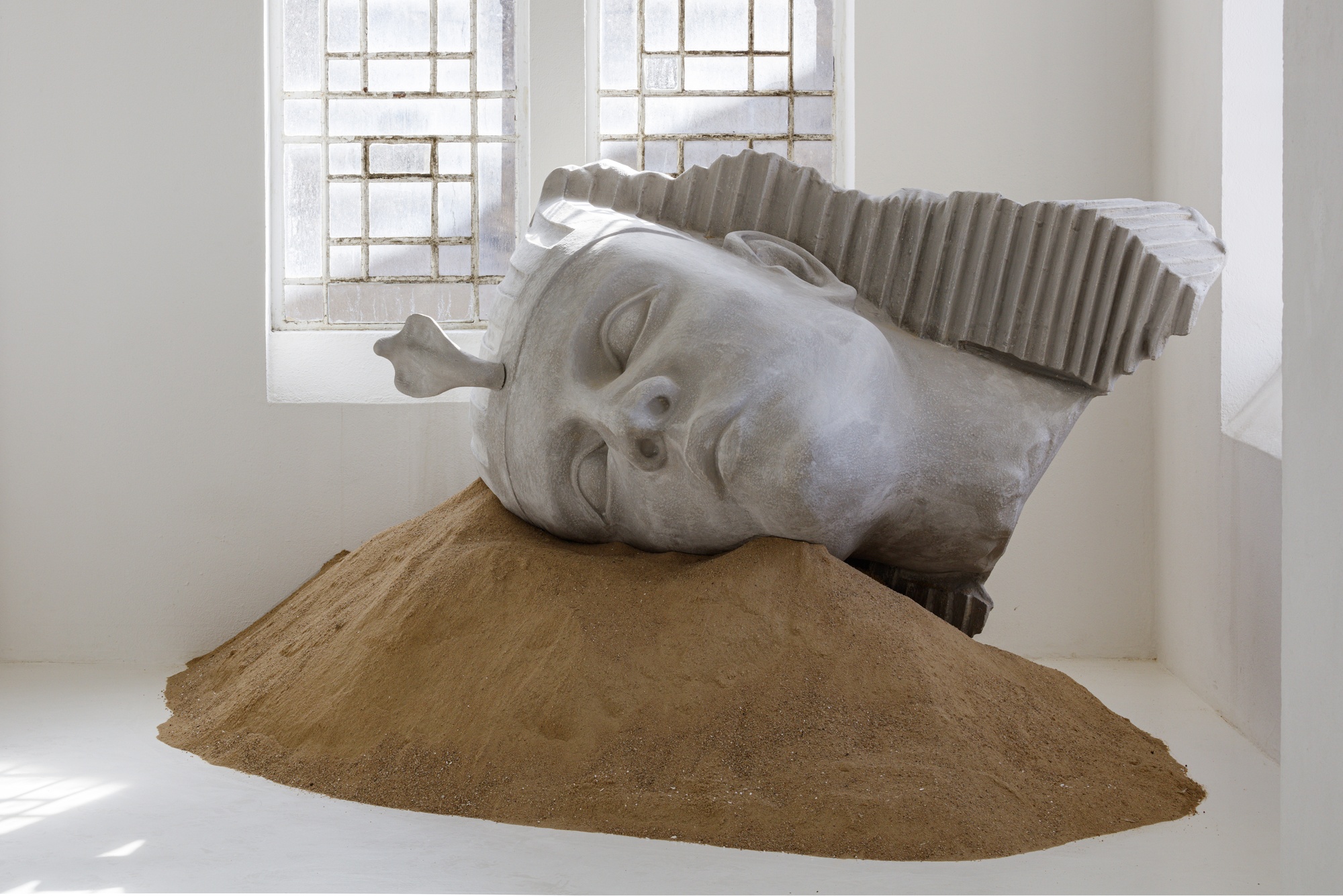
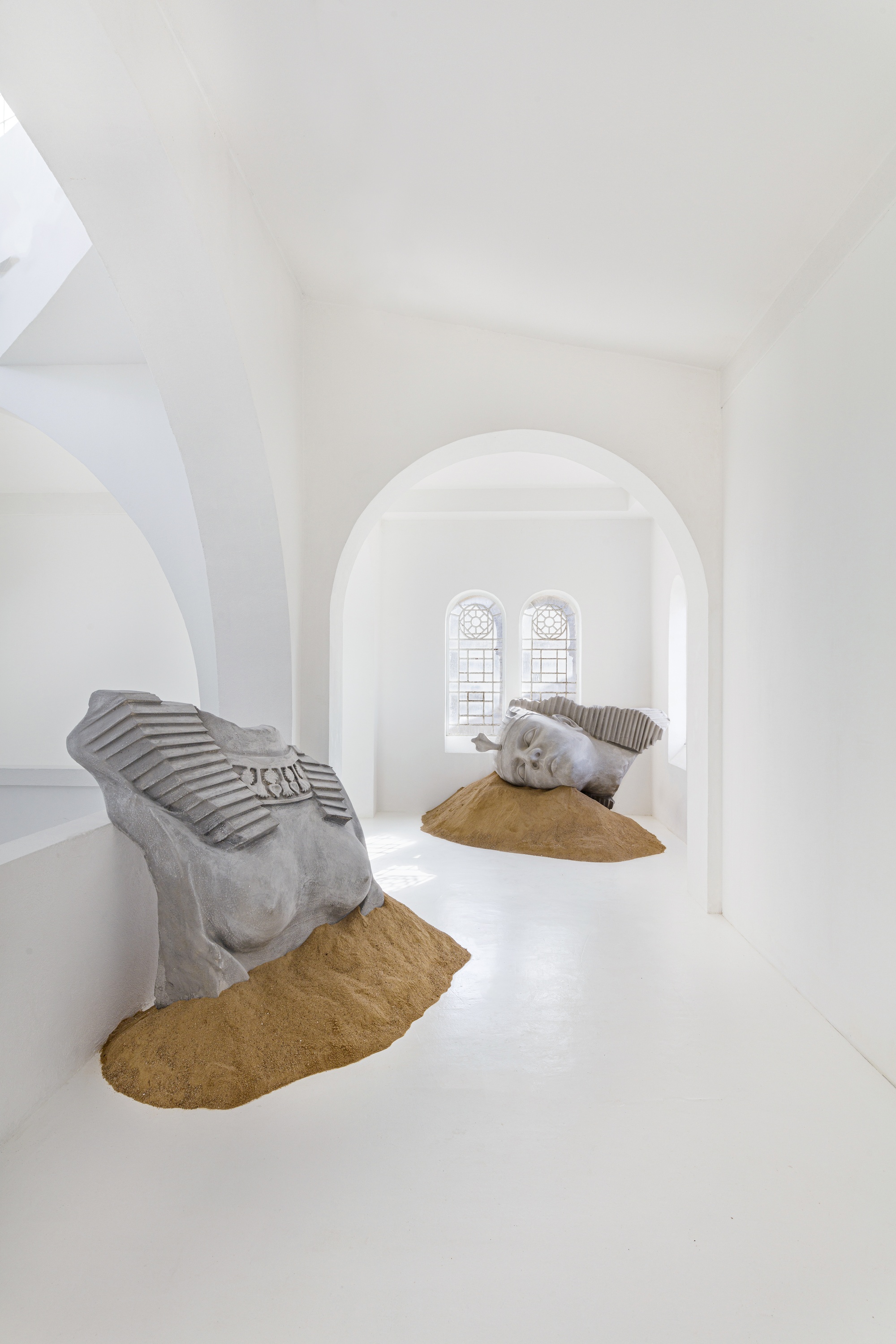
Their New Power (Head)
Installation View, 2020
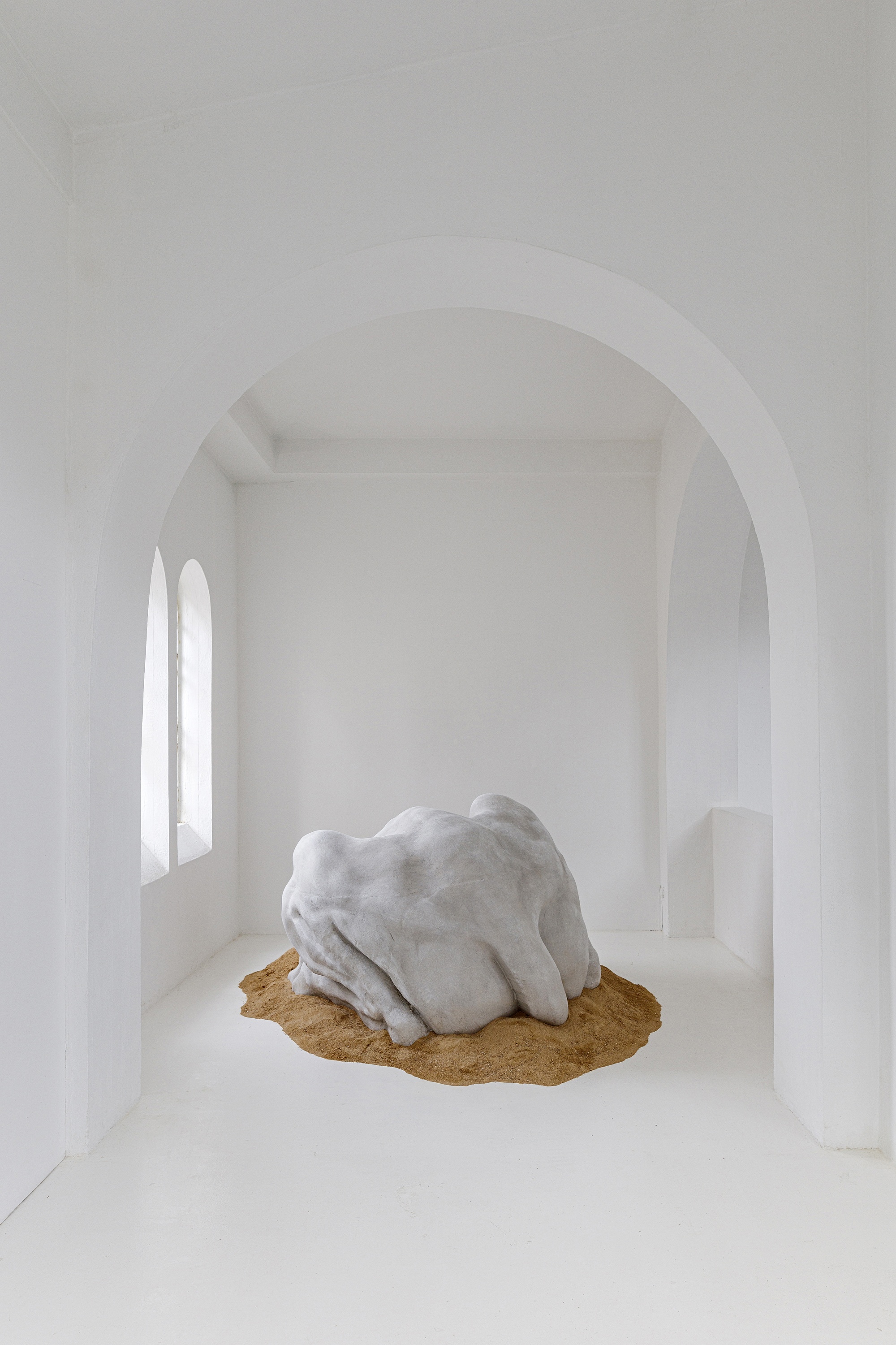
Their New Power (Back)
Installation View, 2020
Their New Power (Chest)
Installation View, 2020
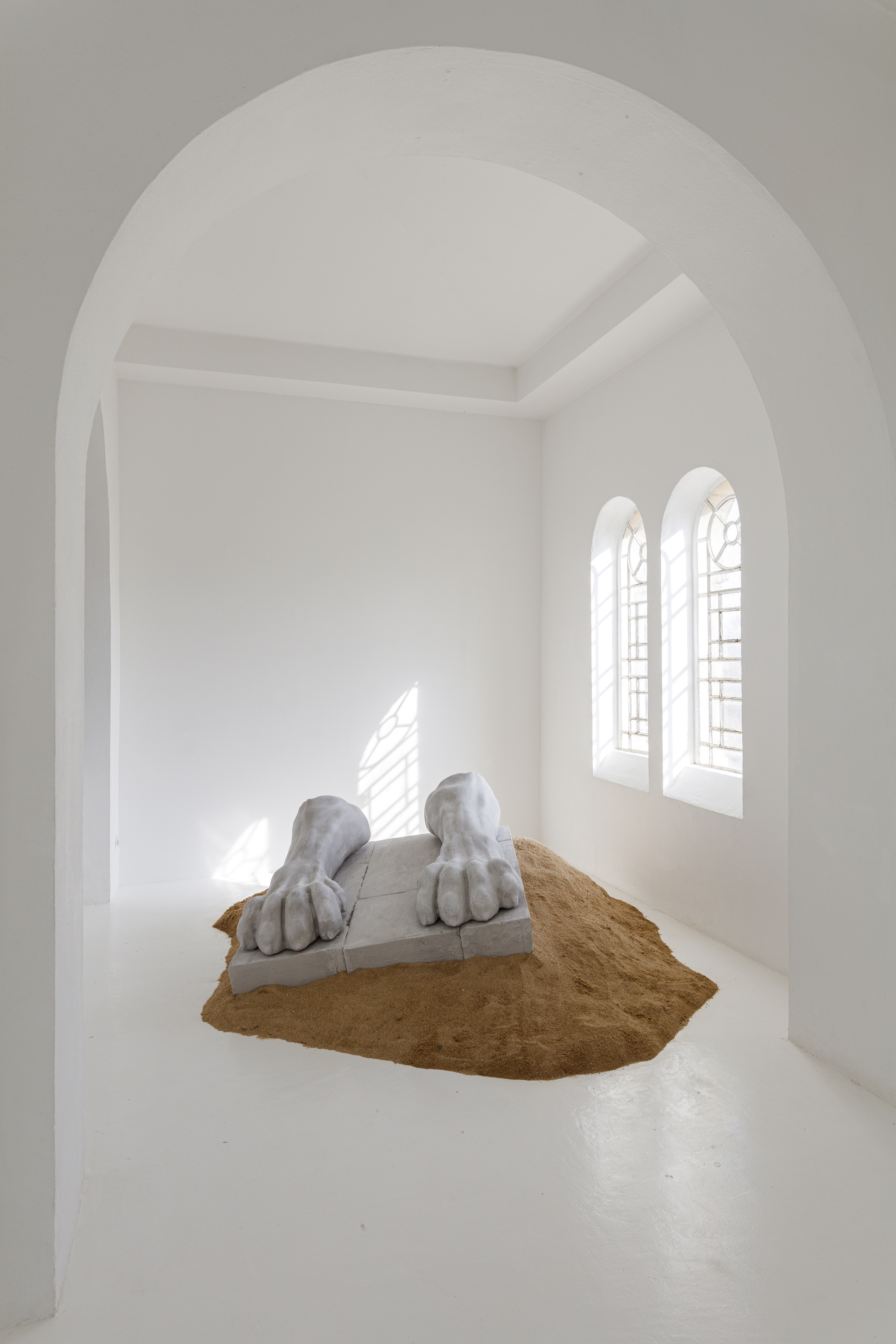
Their New Power (Paws)
Installation View, 2020
The Singing Dunes, CAC Synagogue de Delme
Scroll Down for German
For her exhibition The Singing Dunes at CAC Synagogue de Delme, the artist uses the phenomenon of the singing dunes and the eternal movement of sandy deserts as a metaphor for nomadism, the transformation of knowledge and civilizations, migrations, the alternation of constructed forms, and the evolution of beliefs.
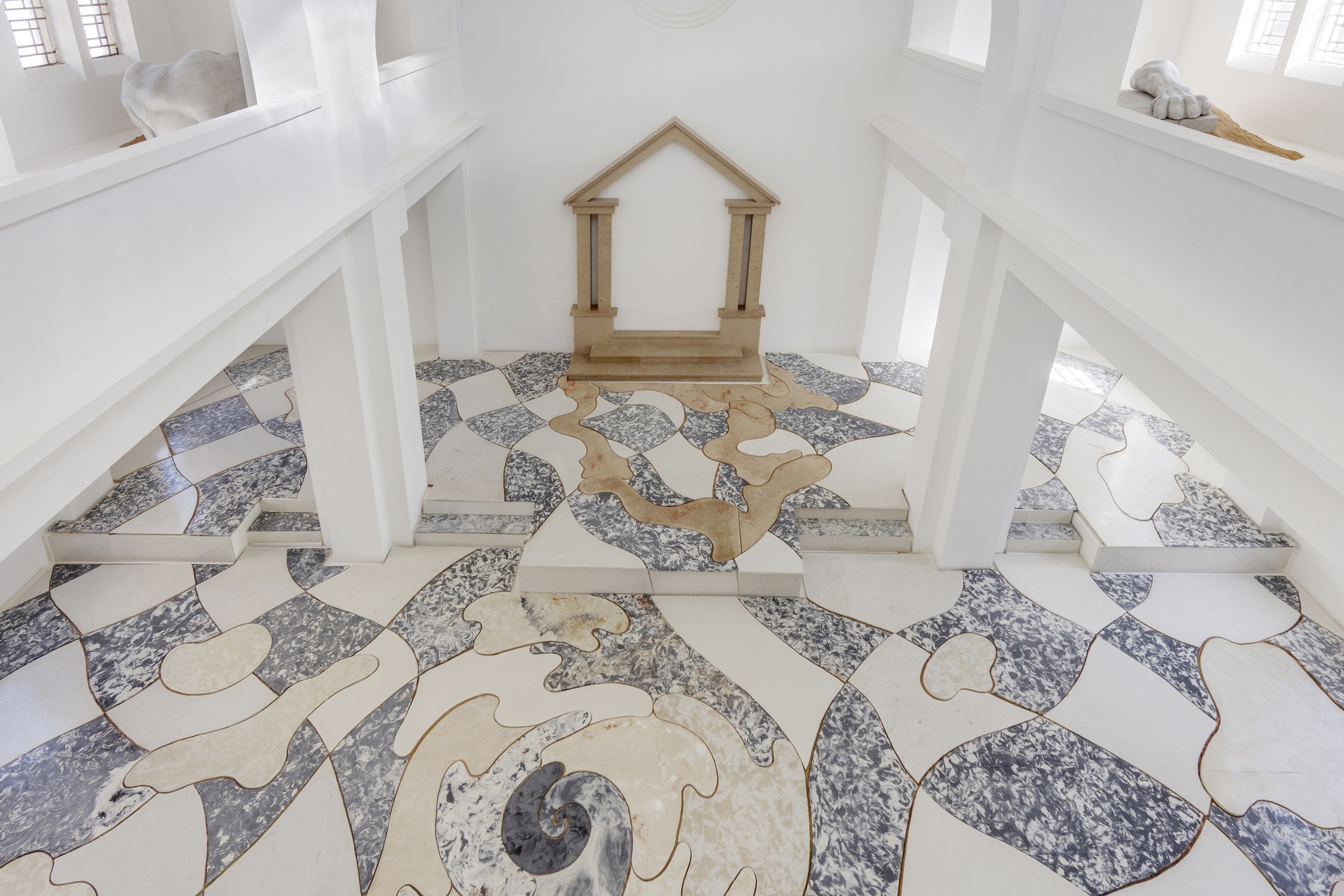
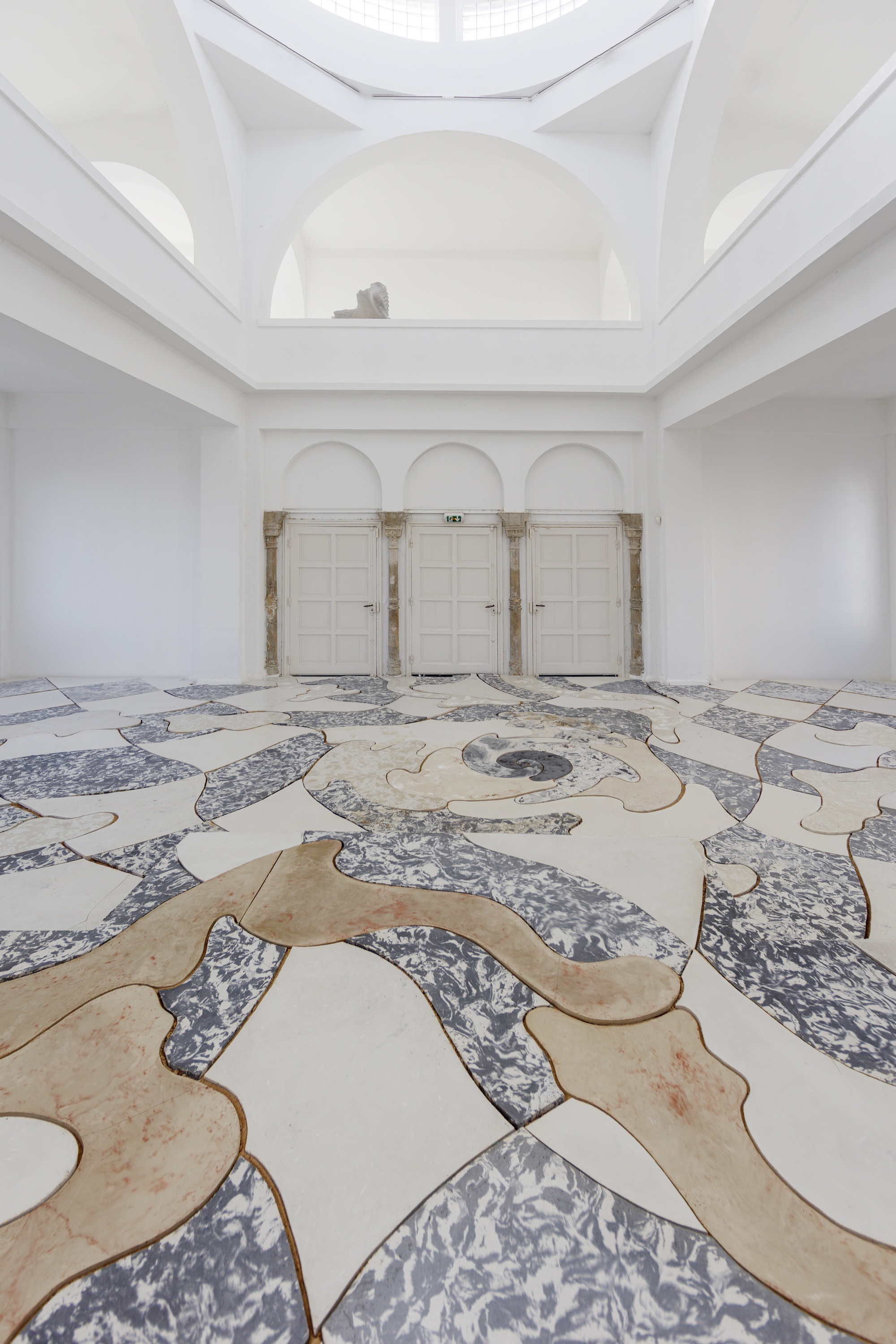
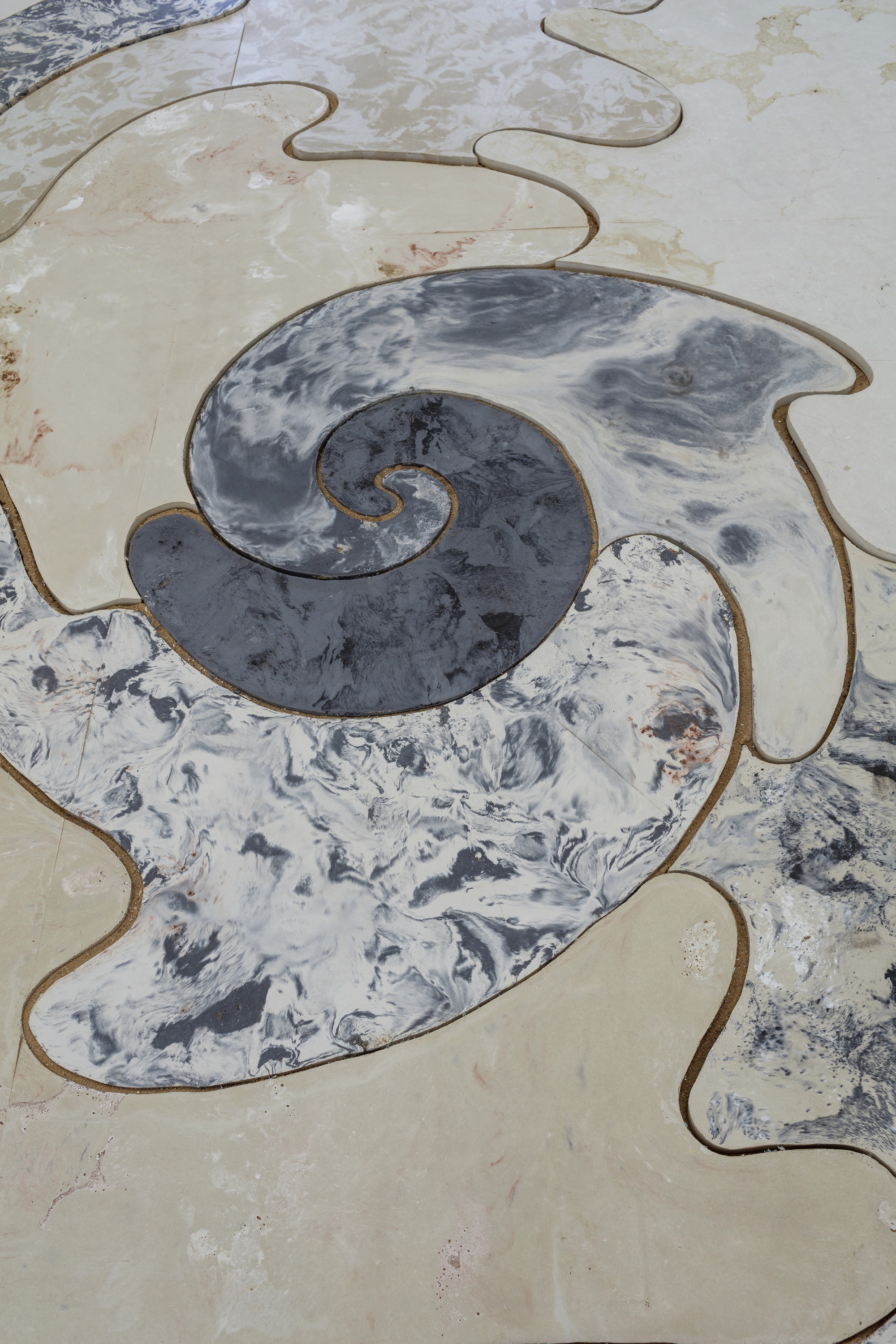
A monumental in situ work made of concrete and created in dialogue with the synagogue’s architecture, spreads on the ground floor. Inspired by the opus sectile technique, which was popular in public buildings and private homes of the ancient and medieval Roman world, this tiled floor depicts the synagogue’s original architectural elements (the Torah ark, the windows and the columns at the entrance) caught in a maelstrom that ends up spiralling into a hole.
Für ihre Ausstellung *The Singing Dunes' im CAC Synagogue de Delme nutzt die Künstlerin das Phänomen der singenden Dünen sowie die ewige Bewegung sandiger Wüsten als Metapher für Nomadismus, die Transformation von Wissen und Zivilisationen, Migrationen, den Wechsel konstruierter Formen und die Entwicklung von Glaubensvorstellungen.
Between quicksand and psychedelic vision, this creation constitutes a monumental, luxurious floor, worthy of the building’s decorative features, which have long disappeared. At the same time the work recalls the movement and inherent fluctuations that accompany the passing of time, altering and transforming forms, knowledge and culture.
German
Eine monumentale, ortsspezifische Arbeit aus Beton, die im Dialog mit der Architektur der Synagoge entstanden ist, breitet sich im Erdgeschoss aus. Inspiriert von der Technik des opus sectile, die in öffentlichen Gebäuden und Privathäusern der antiken und mittelalterlichen römischen Welt verbreitet war, zeigt dieser geflieste Boden die ursprünglichen architektonischen Elemente der Synagoge – den Toraschrein, die Fenster und die Säulen des Eingangs –, eingefangen in einem Strudel, der schließlich in einem Loch mündet.
Zwischen Treibsand und psychedelischer Vision entfaltet sich so ein monumentaler, luxuriöser Boden, der den einst reichen dekorativen Ausstattungsmerkmalen des Gebäudes gerecht wird, die längst verschwunden sind. Zugleich erinnert die Arbeit an die Bewegung und die inhärenten Schwankungen, die den Lauf der Zeit begleiten und Formen, Wissen und Kultur verändern und transformieren.
Photo: OH Dancy