Vortex Reloaded
Installation View, 2023
Vortex Reloaded
Installation View, 2023
Vortex Reloaded
Installation View, 2023
Vortex Reloaded
Installation View, 2023
Vortex Reloaded
Installation View, 2023
Vortex Reloaded
Installation View, 2023
Vortex Reloaded
Installation View, 2023
Vortex Reloaded, Kunsthal Thy
Scroll Down for German
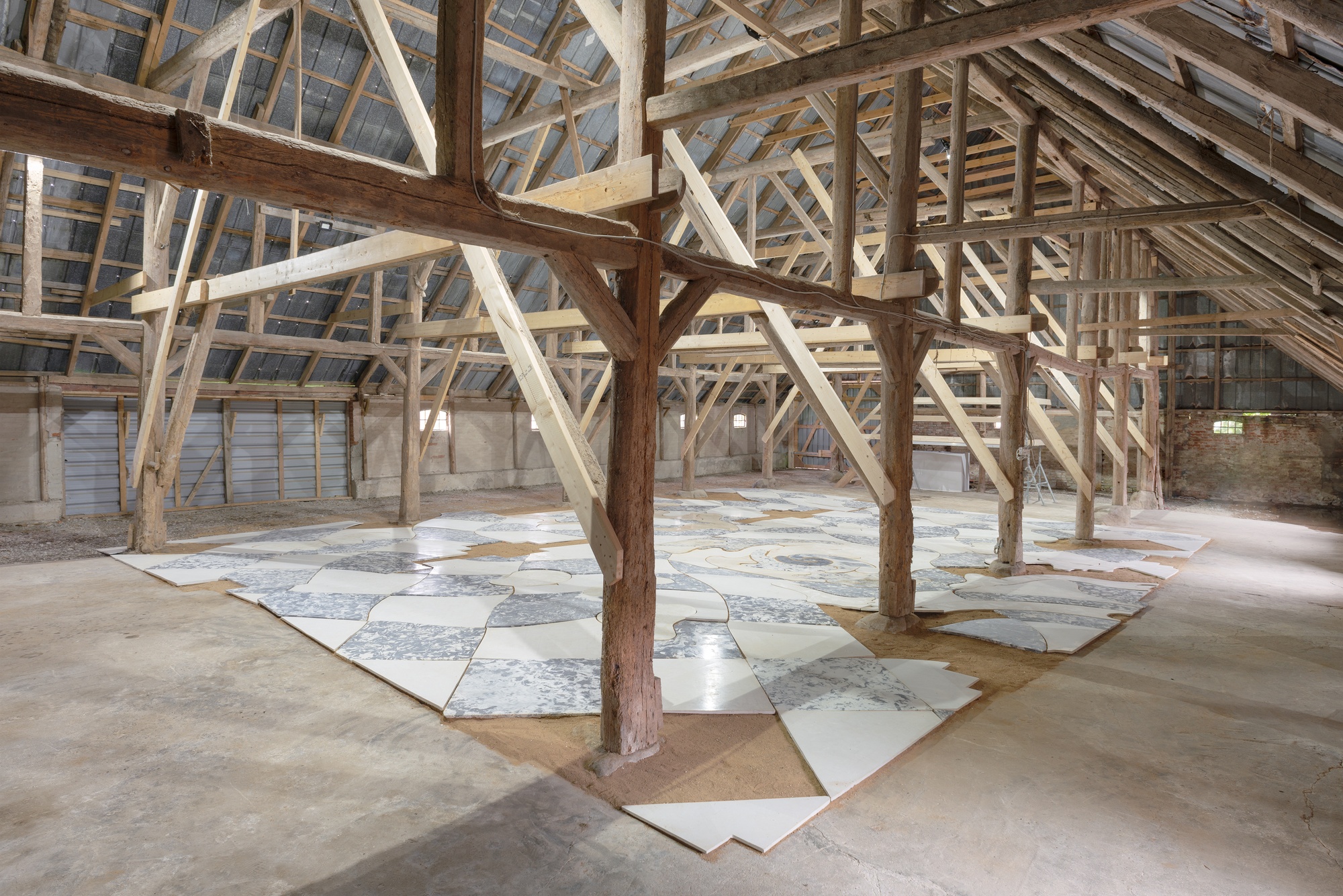
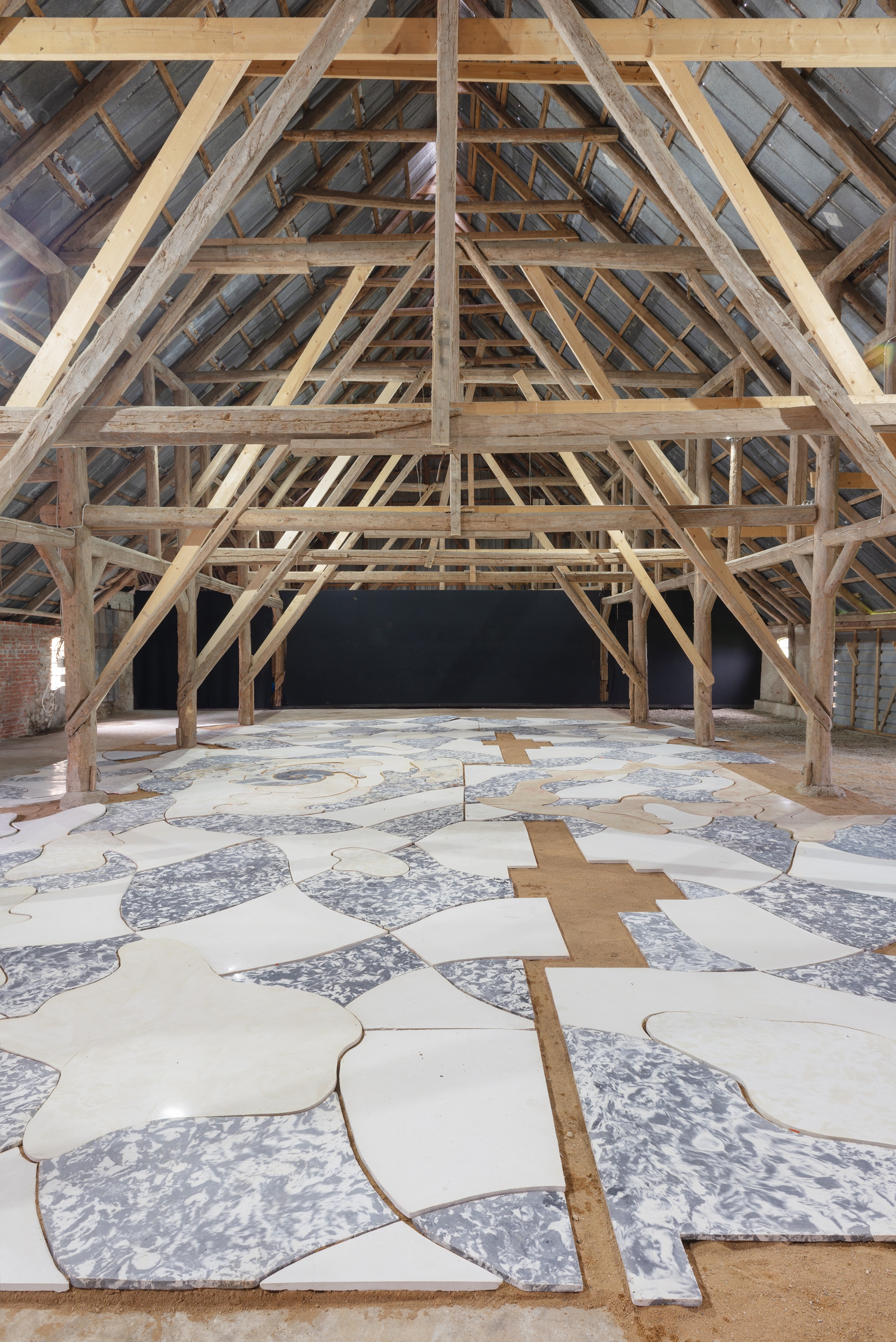
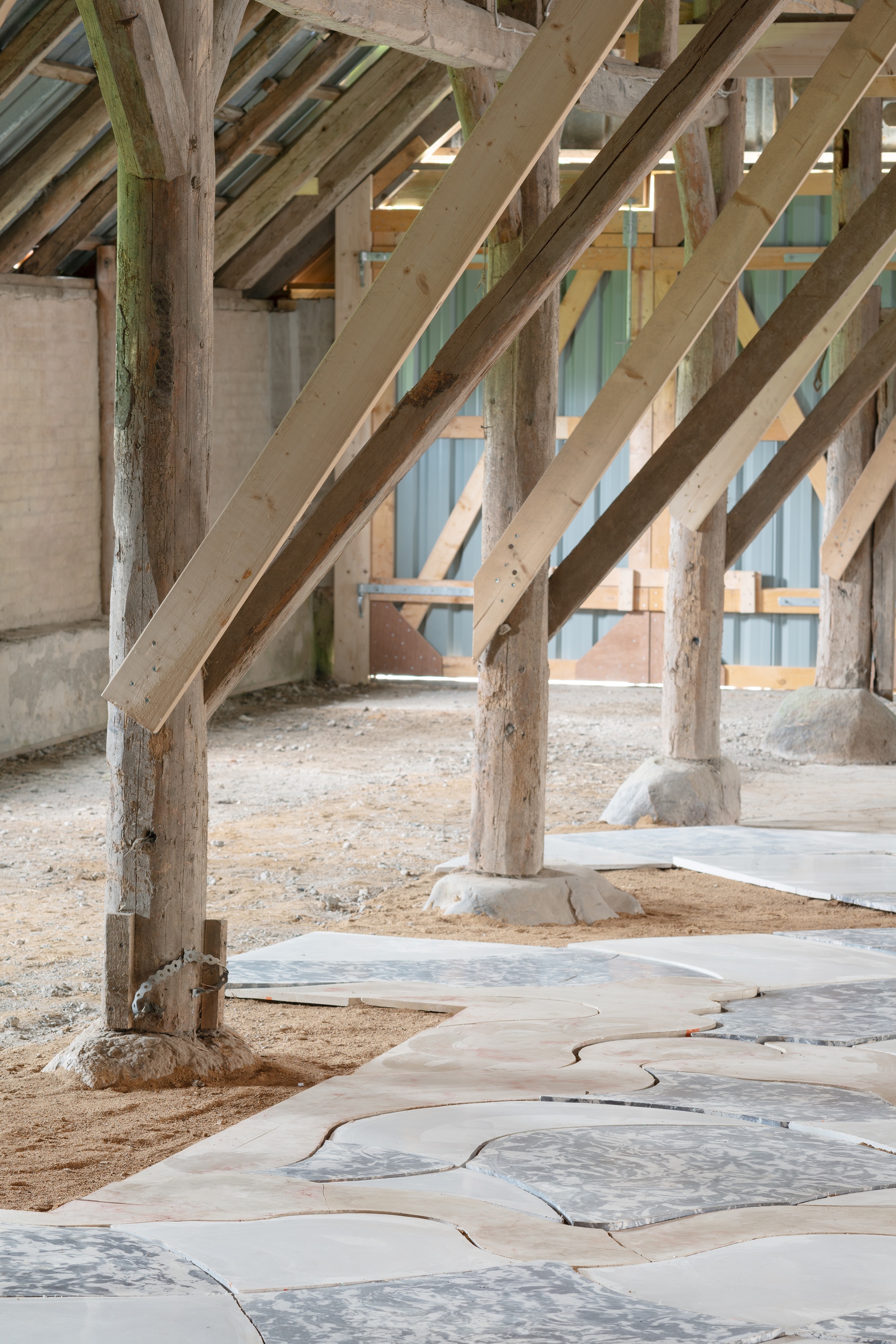
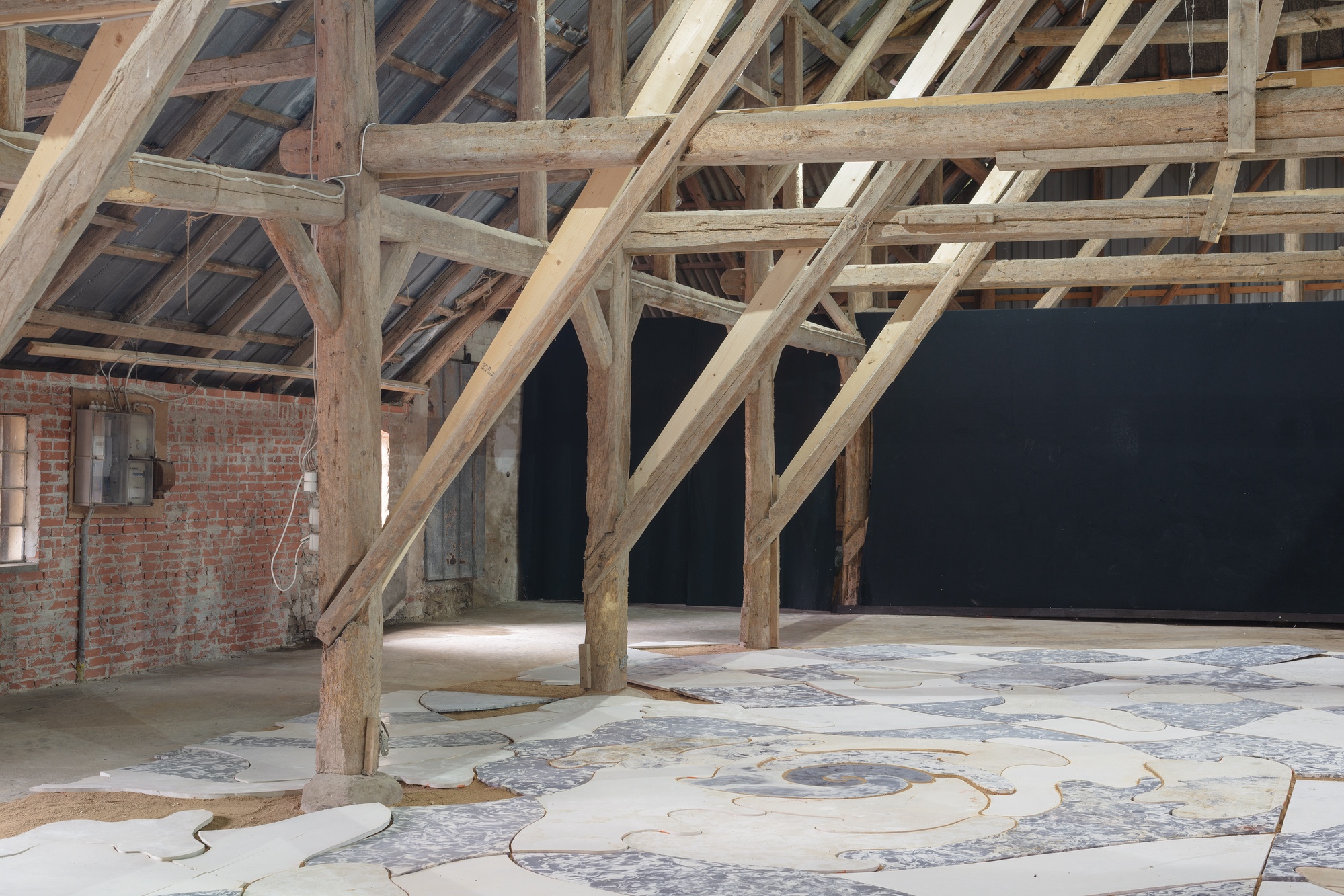
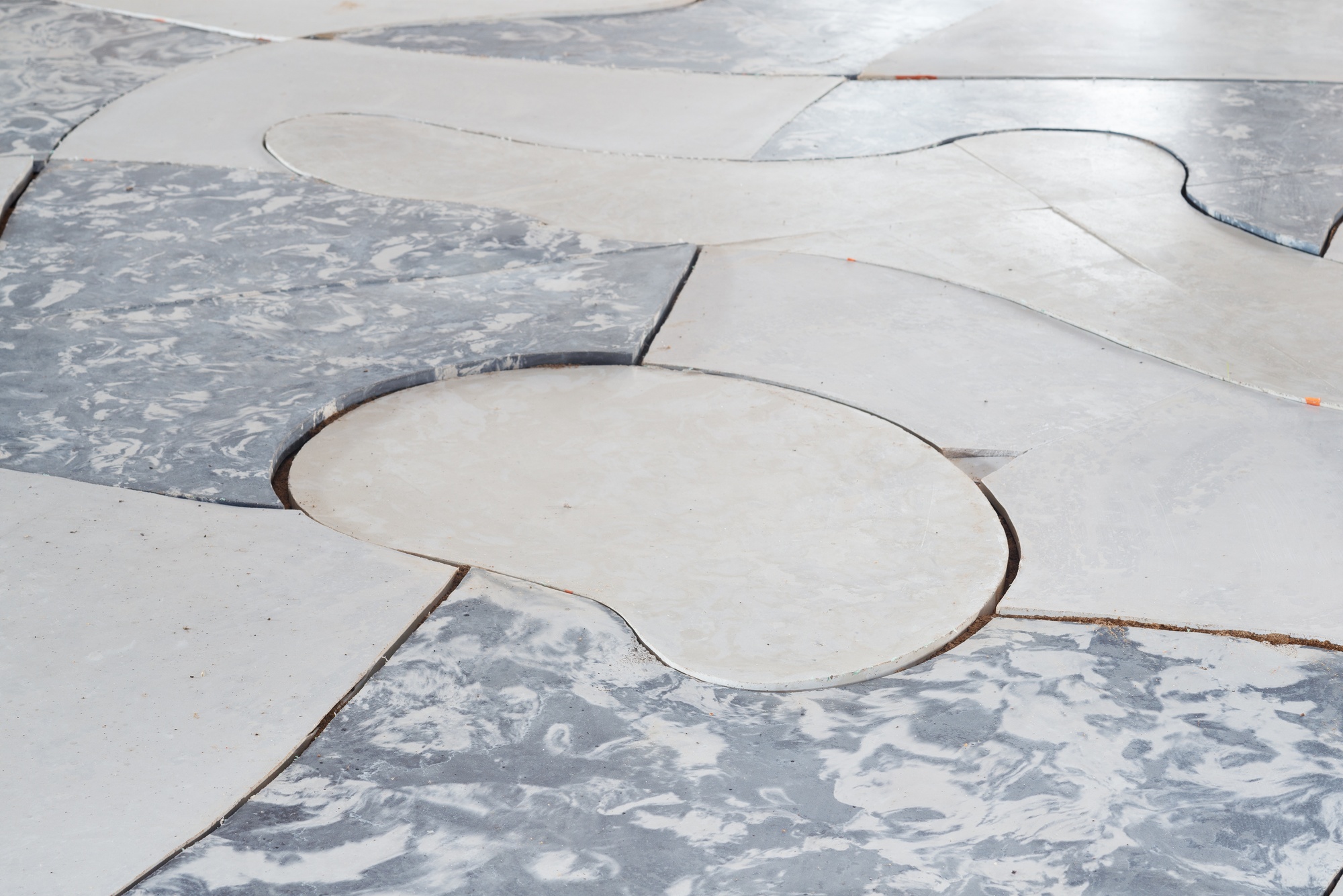
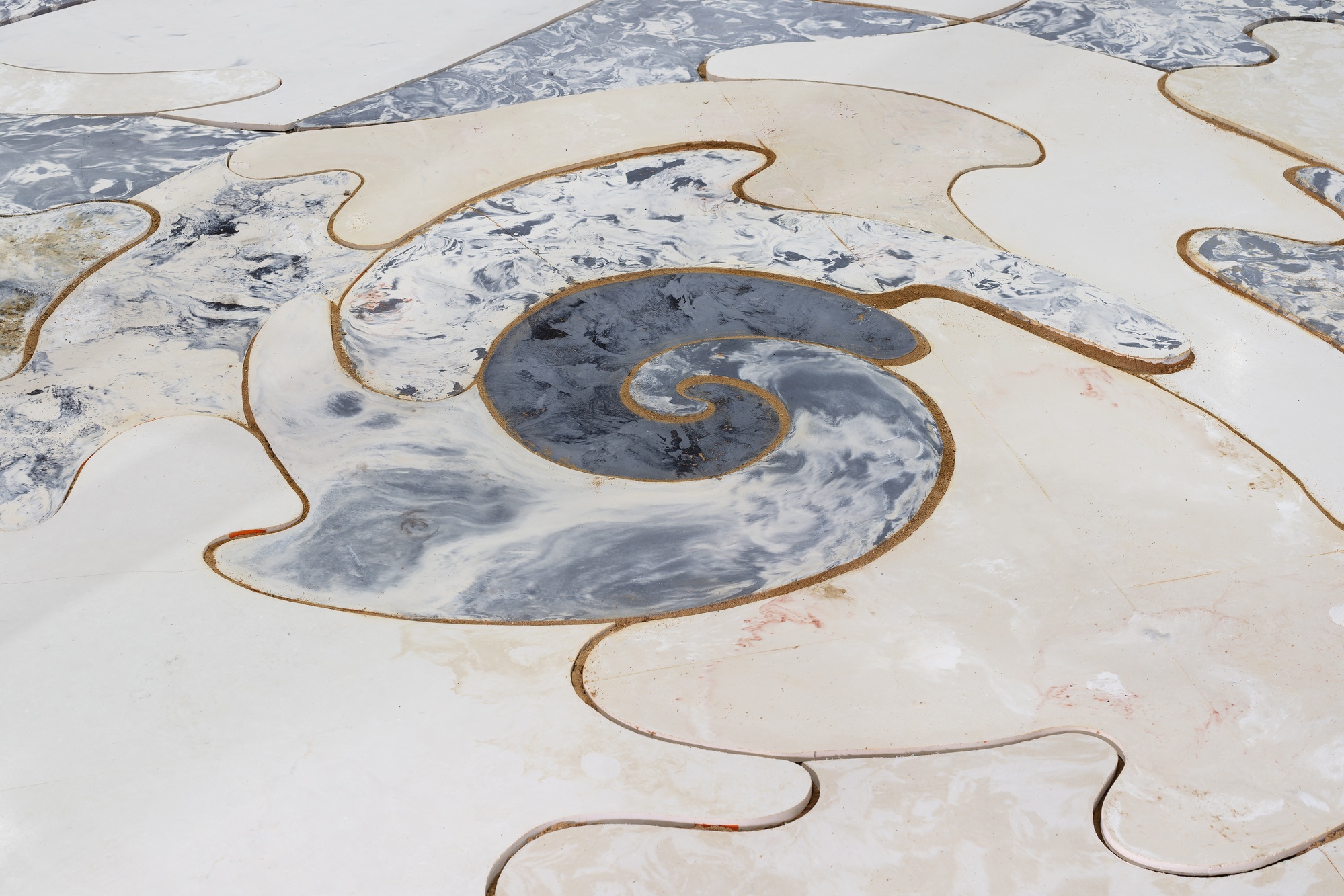
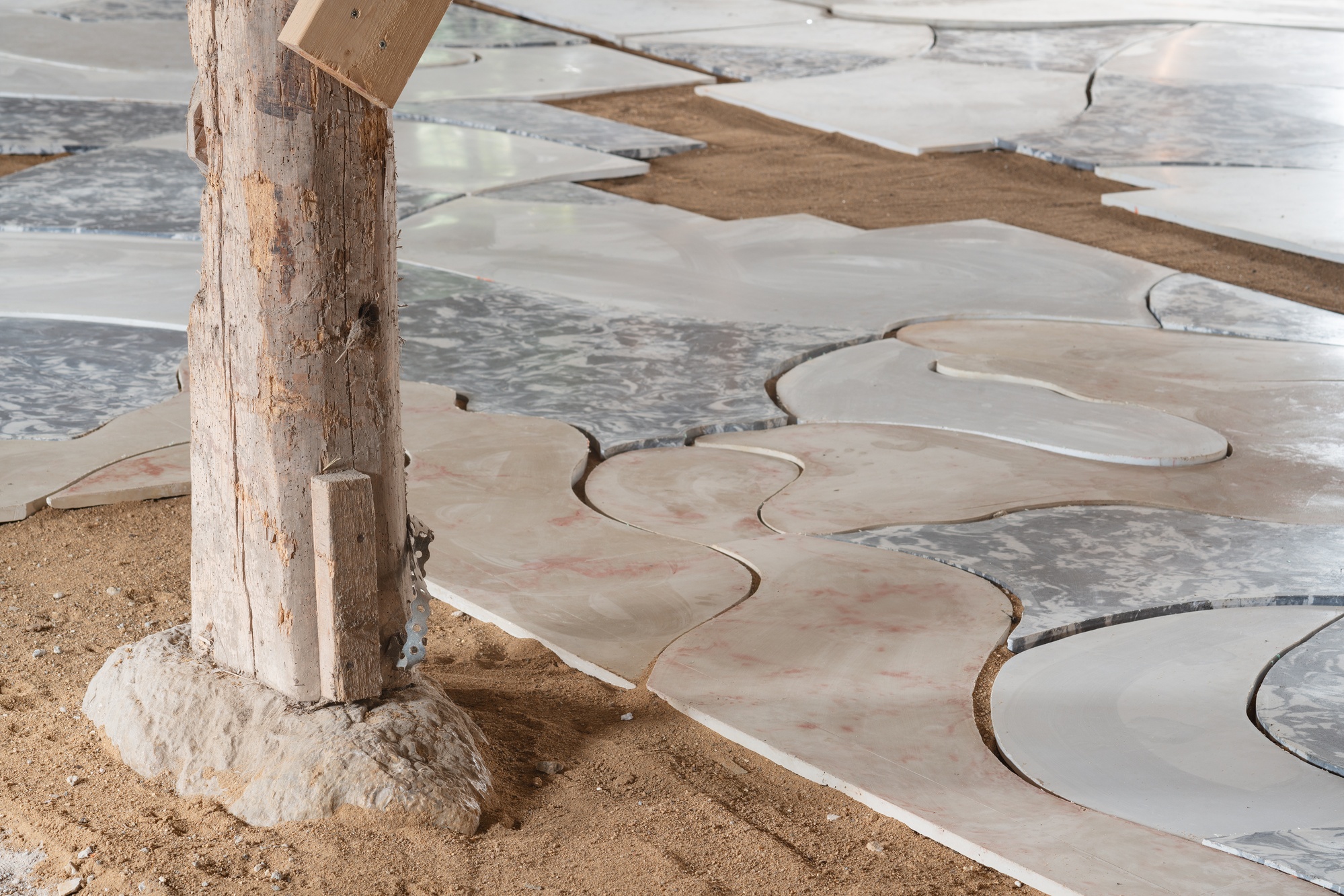
For the second exhibition at the newly opened Kunsthal Thy, Zuzanna Czebatul has been invited to present her work Vortex Reloaded. The 10 x 12 meter floor installation consists of more than 200 concrete slabs, weighing over three tons in total, which were colored using a special pigmenting process. It was originally created in 2020 as Vortex (New Day Coming) for the synagogue of Delme, built in 1881, which was destroyed during World War II and has been used as an exhibition space since the early 1990s.
A vortex is defined as a circular movement around a gravitational center that draws in material, sets it in motion, concentrates and condenses it, and ultimately brings it to a climax. Zuzanna Czebatul’s Vortex references the opus sectile technique from ancient Egypt, which experienced its first major revival in Roman antiquity. In this technique, large slabs of marble, mother-of-pearl, or glass are cut to fit a motif, rather than filling a composition with many small, uniform pieces as in mosaic. The shapes of the tiles themselves echo architectural elements of the Delme synagogue—such as the Torah ark, windows, and columns—and pull them into an abstract whirlpool.
Czebatul’s Vortex resembles a black hole capable of intertwining and compressing different temporalities. In doing so, it carries the various historical layers of both the material and the architecture of the Delme synagogue into Kunsthal Thy—while also reflecting, through this swirling motion, the site’s own complex history of formation, which begins with the construction of the Dovergaard farmstead in the 16th century. The barn itself was built in 1837, and when looking up at its wooden roof structure, one can identify modifications and repairs dating back up to 150 years. Throughout the timber framework of Dovergaard, one finds year markings left by numerous craftsmen who, over time, built, repaired, and inscribed themselves into the history of the building.
Zuzanna Czebatul’s Vortex Reloaded captures a specific point in history and, from that vantage point, looks back into a past that seems to elude direct access. Few works resonate as strongly with the present condition of the Dovergaard site, with its surrounding burial mounds and traces from the Stone and Bronze Ages discovered here. Today, decisions are being made about which historical layers of this ensemble should be made visible and how they should be preserved for future generations. What emerges is a perspective on the past that will itself one day be read as a testament to the historicity of our own time.
German
Für die zweite Ausstellung der neueröffneten Kunsthal Thy ist Zuzanna Czebatul eingeladen, ihre Ar-beit Vortex Reloaded zu zeigen. Die 10 x 12 Meter große Bodenarbeit besteht aus über 200 Betonplatten, die zusammen über drei Tonnen wiegen und in einem speziellen Verfahren mit Pigmenten eingefärbt wurden. Sie entstand ursprünglich 2020 als Vortex (New Day Coming) für die 1881 erbaute Synagoge von Delme in Frankreich, welche im zweiten Weltkrieg zerstört wurde und seit den frühen 90er Jahren als Ausstellungsraum genutzt wird.
Ein Vortex definiert eine zirkuläre Bewegung um ein Gravitationszentrum, das Material anzieht, in Bewegung versetzt, es konzentriert, verdichtet und schließlich kulminieren lässt. Zuzanna Czebatuls Vortex zitiert die Opus Sectile Technik aus dem alten Ägypten, die in der römischen Antike ihr erstes großes Revival erlebte. Große Marmor-, Perlmutt- oder Glasscheiben werden hierfür auf ein Motiv zugeschnitten, statt wie beim Mosaik das Motiv mit vielen gleichförmigen kleinen Teilen zu füllen. Die Form der Fliesen selbst nimmt architektonische Elemente der Synagoge von Delme, wie den Thora-Schrein, die Fenster und Säulen des Raums auf und zieht sie in einen abstrakten Malstrom. Zuzanna Czebatuls Vortex ähnelt dabei einem Schwarzen Loch, das in der Lage ist, Zeiten miteinander zu verwirbeln und zu verquicken. So trägt er nicht nur die unterschiedlichen Zeitebenen des Materials und der Architektur der Delmer Synagoge mit sich in die Kunshal Thy - Er spiegelt mit ihrer Verwir-belung auch deren eigene vielschichtige Entstehungsgeschichte, die mit dem Bau des Bauernhofs Dovergaard im 16. Jahrhundert beginnt. Die Scheune selbst wurde 1837 erbaut und wenn man zur hölzernen Dachkonstruktion hinaufblickt, kann man dort Modifikationen und Reparaturen erkennen, die bis zu 150 Jahre zurückreichen. Überall im Holzwerk von Dovergaard findet man die Jahresmar-kierungen zahlreicher Handwerker, die im Laufe der Zeit hier gebaut, repariert und sich so in die Ge-schichte des Hauses eingeschrieben haben.
Zuzanna Czebatuls Vortex Reloaded, hält einen Punkt der Geschichte fest und blickt von diesem aus in die Vergangenheit, die sich dem konkreten Zugriff zu entwinden scheint. Sie passt wie keine andere Arbeit in die heutige Zeit des Dovergaard Gehöfts mit den umliegenden Grabhügeln und den hier ge-fundenen Spuren aus der Stein- und Bronzezeit. Denn aktuell wird hier entschieden, welche Epoche der Entstehung dieses Ensembles wie sichtbar gemacht und so für die Nachwelt revitalisiert wird. Hier wird ein Blick zurück geprägt, der einst selbst als Zeuge der Historizität seiner Epoche gelesen werden wird.
Photo: Jacob Friis-Holm Nielsen